

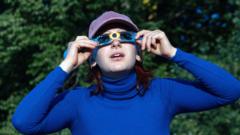
Medical professionals are advising the public to monitor their eyesight following a solar eclipse that occurred on Wednesday, cautioning that damage from viewing the phenomenon without proper protection may not become immediately apparent. Potential symptoms of eye injury include blurred or distorted vision, the presence of a dark or gray spot in the center of the visual field, redness, grittiness, and heightened sensitivity to light. In some cases, people may experience eye pain or sudden changes in sight.
The risk stems from the eye’s vulnerability to direct sunlight exposure. When observing an eclipse, the darker conditions can suppress the body’s normal protective reflex of averting the gaze, allowing harmful ultraviolet radiation to damage the retina—the light-sensitive tissue at the back of the eye responsible for central vision clarity. This condition, known as solar retinopathy, poses particular danger because the retina contains no pain receptors, meaning individuals may not realize damage is occurring until hours after exposure. During the 1999 total eclipse visible in the UK, approximately 70 people sustained lasting vision damage, with some having looked at the event for less than one minute.
Experts emphasize that only specialized solar eclipse glasses provide adequate eye protection, as standard sunglasses and other makeshift devices offer insufficient safeguards. Alexander Ionides, a consultant eye surgeon at Moorfields Eye Hospital in London, notes that if damage occurs, symptoms typically emerge within several hours and may include a distinctive spot obscuring central vision during everyday activities like reading or recognizing faces. The symptoms develop gradually and painlessly, distinguishing them from typical burn-related injuries.
Those concerned about potential eye damage are advised to seek prompt medical evaluation. Opticians are equipped with retinal scanning technology to detect solar retinopathy, and hospital eye units and casualty departments can provide comprehensive assessment. Following Wednesday’s partial eclipse, preliminary reports indicate fewer individuals have contacted medical facilities compared to the 1999 event, potentially suggesting increased public awareness about the dangers of unprotected solar viewing.
Article Attribution | Read More at Article Source
Article summary produced by Claude AI