

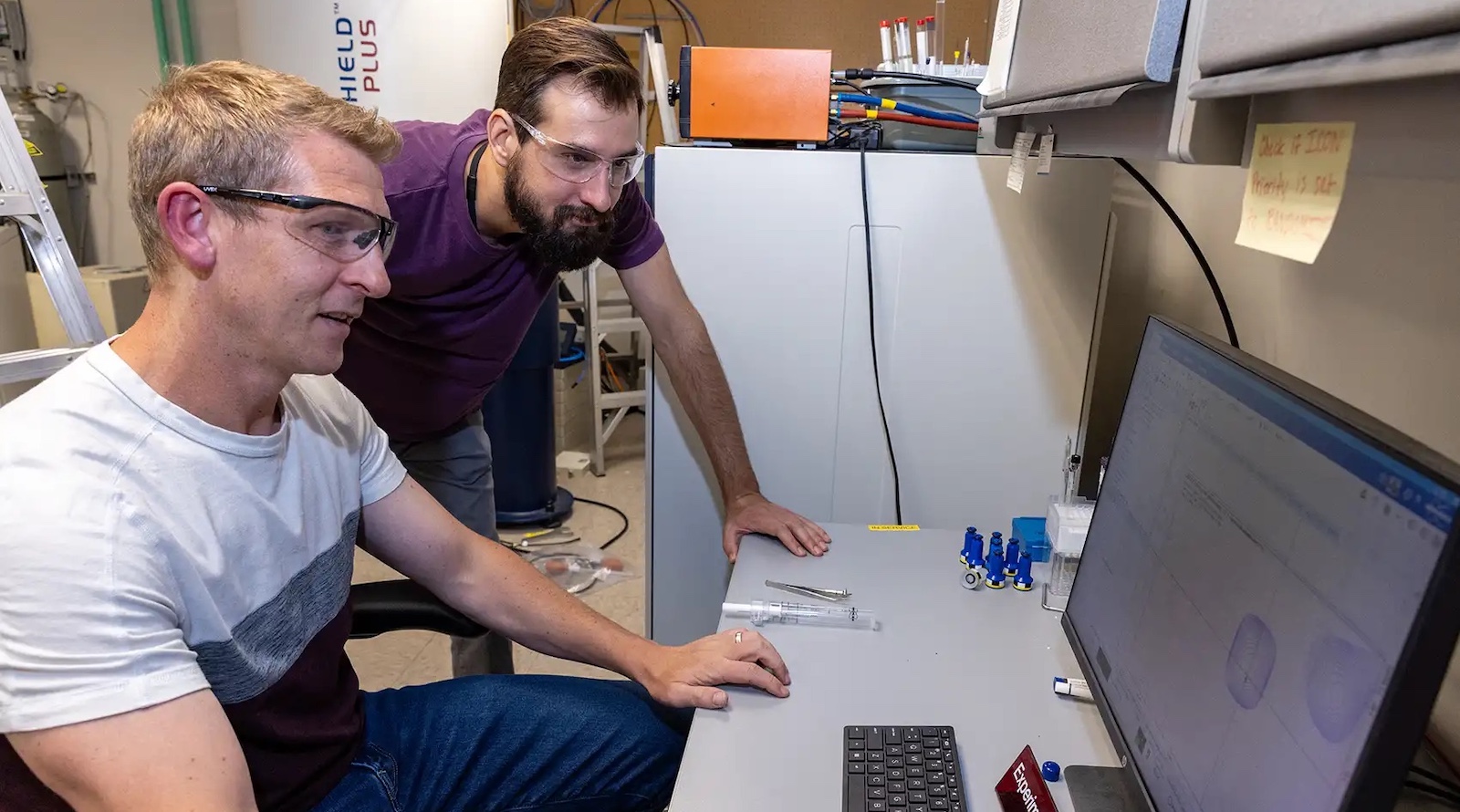
Scientists at the National Laboratory of the Rockies (NLR) are increasingly applying nuclear magnetic resonance (NMR) technology beyond routine analytical screening to drive innovation across multiple industries. Bennett Addison, the facility’s NMR director, emphasizes that the 80-year-old technique can reveal atomic-level details that help researchers confirm whether their products match intended specifications, from semiconductors to synthetic fibers.
A key breakthrough came when researcher Ross Kerner collaborated with Addison to use advanced NMR methods to identify impurities in semiconductor thin films from manufacturers. Using a high-sensitivity magnet over just two days, Kerner demonstrated quantifiable contamination levels that surprised industry partners and prompted several companies to adjust their production processes. This work has been published in prestigious journals including Nature and ACS Applied Energy Materials.
Beyond semiconductors, NLR scientists are leveraging NMR to advance bioenergy research. Researchers created the first computational model of poplar tree cell wall structure by using solid-state NMR techniques, which allowed them to move beyond artistic renderings to precise atomic positioning. This work, supported by the Department of Energy, enables computer simulation and accelerates discoveries in converting biomass into chemicals and fuels. High-throughput NMR methods are also being used to profile sugar and lignin composition across thousands of tree samples, turning plantation data into actionable insights for improving bio-based product consistency.
Additional applications include characterizing complex polymers using magic-angle spinning NMR for bioproducts and elastic materials, and analyzing ion diffusion in battery electrolytes using lithium-7 NMR to understand performance factors across different temperatures. Currently, around 120 registered users run NMR scans at NLR, with dozens of industry partners relying on the facility’s services.
Addison and others suggest the broader scientific community underutilizes advanced NMR capabilities, partly due to limited training and comfort with routine techniques. Expanding researcher familiarity with NMR’s full potential could provide competitive advantages for U.S. energy, chemical, materials, and critical minerals industries.
Article Attribution | Read More at Article Source
Article summary produced by Claude AI