

A severe drought affecting England has created stark contrasts in agricultural outcomes, with vegetable producers facing significant financial hardship while wine growers report improved conditions and increased production.
Vegetable farmer Phil Collins in Wiltshire has experienced substantial crop losses after six weeks without rainfall, with thousands of cauliflowers damaged and potato yields severely diminished. The drought, the driest July in 190 years according to agricultural reports, has forced Collins to take on his first overdraft in three decades of farming. He reported harvesting only about a third of his normal runner bean crop. Other vegetable growers across the country are similarly warning of produce shortages. The economic challenge is compounded by the fact that irrigating crops to survive the drought would drive production costs beyond what consumers accustomed to supermarket prices would be willing to pay.
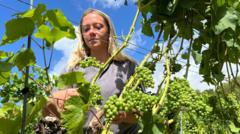
In contrast, winemakers operating in southern England are experiencing favorable growing conditions. Sandy Luck, who operates Aldwick Estate vineyard in North Somerset, reports that the hot, dry summer has accelerated grape ripening and reduced disease pressure. The warmer temperatures are enabling English winemakers to expand beyond their traditional production of sparkling wines and dry whites into still red varieties, particularly Pinot Noir, which require higher sugar content and warmer conditions to develop properly. English wine production increased 55 percent in 2025 compared to the previous year, though prices remain higher than continental competitors due to smaller production scale and quality-focused operations.
Climate scientists at the Met Office confirm that the current heatwaves are linked to broader climate change patterns and indicate that hot, dry summers will become more frequent in the United Kingdom. Farmers are beginning to consider long-term adaptations, with some exploring whether heat-tolerant crops like pumpkins might provide alternatives, though even traditionally drought-resistant Mediterranean crops have struggled under current conditions. The diverging fortunes of wine and vegetable producers highlight the uneven impacts of changing climate patterns on different agricultural sectors.
Article Attribution | Read More at Article Source
Article summary produced by Claude AI