

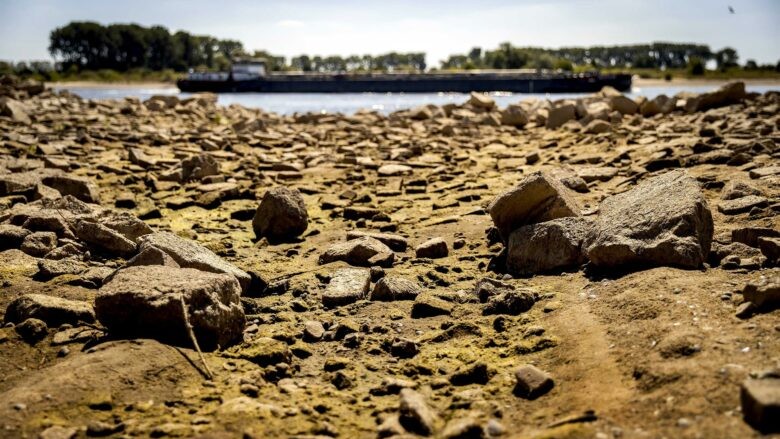
The Rhine River’s water levels fell to record lows in mid-August, dropping below 10 centimetres at Kaub, the critical gauge point determining cargo capacity between the Amsterdam-Rotterdam-Antwerp hub and southern industrial centres. While water levels have since recovered to approximately 45 centimetres, this remains significantly below the 77-centimetre threshold needed for normal commercial navigation. The shallow conditions have fragmented what typically functions as a unified transport corridor, with most vessels unable to transit the Upper Rhine while only specialized low-draft barges can navigate the route.
The chemical industry faces the most immediate pressure, particularly facilities concentrated along the Rhine corridor. Major steam crackers operated by BASF, INEOS, LyondellBasell and Shell in the region have combined ethylene capacity of approximately 3.1 million tonnes annually. BASF’s Ludwigshafen complex is especially vulnerable, as roughly 40 percent of its incoming and outgoing goods normally move by river. With barges forced to carry significantly reduced loads, finished chemical products cannot leave sites efficiently, causing storage to fill and operators to curtail production runs. Secondary effects ripple through smaller markets, as reduced cracker output constrains co-product availability including butadiene and pyrolysis gasoline, which cannot be easily rerouted through alternative transport methods.
Refined fuel distribution faces comparable challenges. While German refineries generally receive crude supplies via pipeline, they depend on river transport to move finished products to customers. The Miro refinery at Karlsruhe exemplifies the constraint, with barges unable to ship diesel, gasoline and heating oil both toward the Amsterdam-Rotterdam-Antwerp hub and upstream to Switzerland. Freight rates have escalated dramatically, with the Karlsruhe route assessed at €215 per tonne compared to approximately €45 per tonne at the end of June. Alternative transport options remain inadequate, as a single fully loaded barge carrying 2,400 tonnes requires approximately 90 trucks to replace, straining available vehicles and infrastructure across the region.
The broader industrial landscape shows stress extending beyond refineries and chemical plants. Steelmakers, polyol producers and other manufacturers have declared force majeure or shifted to costlier rail and road alternatives. However, these workarounds intensify competition for limited truck and train capacity, creating cumulative disruptions as each industry addresses its own bottleneck. Eastern France has reported localized fuel shortages, while Switzerland faces elevated import costs and potential strategic stock drawdowns. Rotterdam and Antwerp maintain sea supply access but experience congestion from slower terminal operations.
The crisis has not yet triggered widespread shortages primarily due to depressed industrial demand across Europe. Chemical crackers operated at approximately 70 percent capacity in July following years of pressure from elevated energy costs, weak construction and automotive sectors, and competitive Asian imports. Simultaneously, inland fuel consumption has declined, reducing the transport volume that the constrained Rhine corridor must handle. This dynamic suggests that Europe is averting a deeper disruption not through infrastructure resilience but through the temporary offset of reduced economic activity, highlighting vulnerabilities in supply chains dependent on the river’s normal navigable capacity.
Article Attribution | Read More at Article Source
Article summary produced by Claude AI