

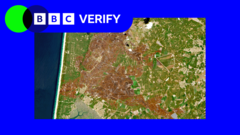
Western Europe has experienced severe environmental damage this summer following successive heatwaves since May, with impacts now clearly visible from satellite imagery. The EU’s Copernicus climate monitoring service confirmed that the region recorded its hottest June-to-July period on file. The sustained heat stems from persistent high-pressure weather systems that have maintained clear skies and allowed temperatures to accumulate, though scientists attribute the broader trend to climate change driven by fossil fuel emissions, which has elevated baseline temperatures and made extreme heat events increasingly frequent and severe.
Water systems across the continent have been significantly affected by the extreme conditions. The Danube, Europe’s second-longest river, has fallen to levels not seen in 30 years in several countries, exposing the river bed and revealing historical artifacts including mammoth bones and a submerged World War 2 vessel. The low water levels have forced nuclear power stations in Hungary and Romania to reduce operations or shut down due to insufficient cooling water availability. Similarly, the Rhine has experienced shipping disruptions, with cargo vessels becoming stranded and river cruise operations suspended.
Alpine glaciers have suffered accelerated melting, with measurements suggesting this could rank among the worst summers on record for ice loss. Satellite data indicates that Switzerland’s Rhône Glacier has retreated over 50 meters since the previous year. Scientists note that unusually mild winter conditions reduced snow cover entering the season, and an early spring heatwave exposed underlying ice to subsequent melting, creating vulnerable conditions for further loss during summer heatwaves.
Wildfire activity has reached unprecedented levels, with France recording over 90,000 hectares burned, already surpassing previous annual records. The Gironde region experienced the largest fire, consuming approximately 42,000 hectares. Researchers attribute the severity partly to extremely dry soil and vegetation conditions created by prolonged heat. Satellite vegetation indices across France, the UK, and western Germany show significantly stressed plant conditions compared to recent historical benchmarks, with some areas experiencing soil moisture levels lower than 98 percent of comparable historical dates, raising concerns for agricultural productivity and food production throughout the region.
Article Attribution | Read More at Article Source
Article summary produced by Claude AI