

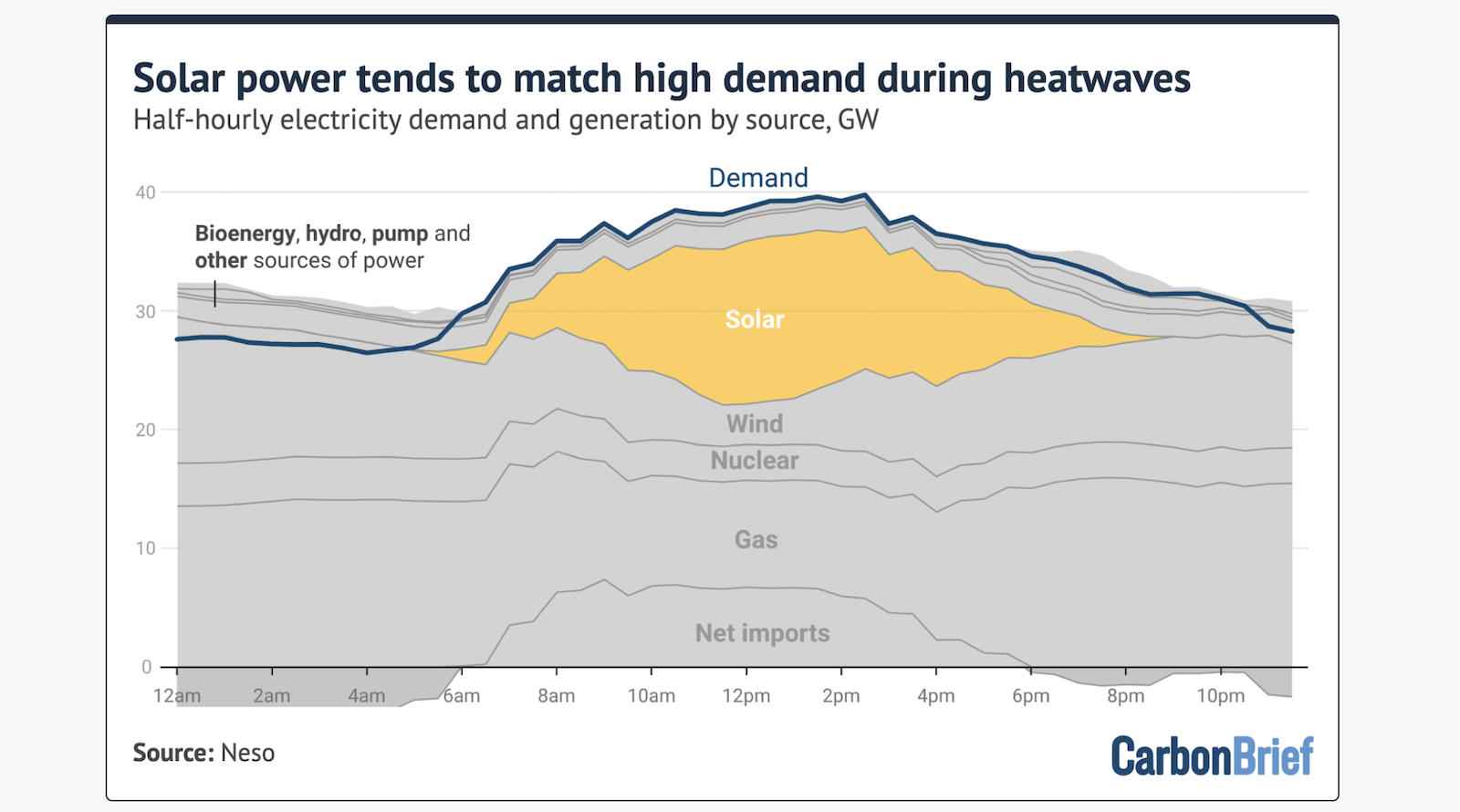
Extreme heat events are affecting power generation globally as heatwaves become more frequent and intense due to climate change. During heat waves in June and July 2026, temperatures exceeding 40 degrees Celsius across parts of Europe disrupted nuclear reactors, reduced gas plant efficiency, lowered wind speeds, and strained electricity networks. Simultaneously, extreme heat increases electricity demand as consumers rely more heavily on cooling systems, driving up prices and straining generation capacity.
Nuclear power generation faces particular vulnerability in regions with high dependence on the technology. France, which relies on nuclear power for approximately 70% of its electricity supply, experienced significant disruptions during the heatwave, with three reactors shutting down and seven operating at reduced capacity, resulting in an almost 9% decline in power production. The underlying issue stems from cooling systems that depend on river and seawater. When water temperatures rise during heatwaves, the cooling capacity of nuclear plants diminishes and overall efficiency declines. Additionally, drought conditions that reduce water availability can create more prolonged operational challenges than elevated water temperatures alone.
Industry experts indicate that while heatwave impacts are genuine, regulatory compliance rather than technical limitations typically drives reactor shutdowns. Environmental protection laws limit the temperature at which cooling water can be returned to rivers to safeguard aquatic ecosystems. Researchers note that a 15-degree Celsius increase in cooling water temperature would reduce output by approximately 6% for a large reactor. Over longer time periods, annual data from 2003 to 2022 shows heatwaves reduced nuclear generation by an average of 0.6% yearly, with France in 2003 experiencing the largest single-year loss at 1.3%.
Currently, drought conditions affecting the Danube River have created significant capacity constraints in southeast Europe, with approximately 40% of the region’s nuclear capacity offline as of early August. Multiple reactors in Hungary and Romania have been forced to shut down or reduce output, pushing some eastern European countries toward energy emergencies. Forecasts indicated the Danube would require days or weeks to return to normal water levels without significant rainfall.
Article Attribution | Read More at Article Source
Article summary produced by Claude AI