

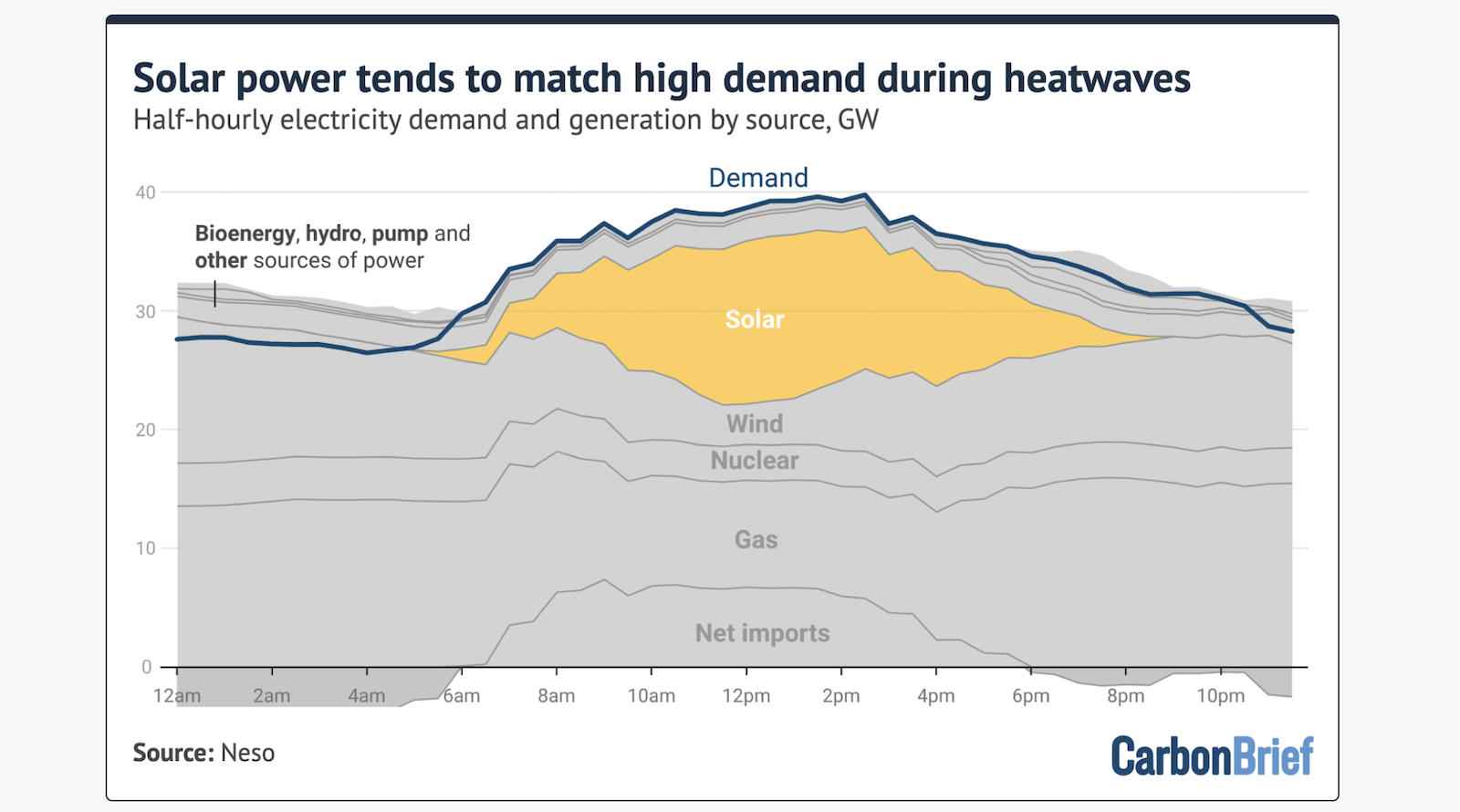
Extreme heat events are increasingly affecting electricity generation worldwide, with multiple power sources experiencing reduced output during heatwaves that occurred in parts of Europe in June and July 2026. While commentators often focus on the intermittent nature of wind and solar power, all generation types face significant challenges when temperatures rise and cooling requirements increase.
Nuclear power plants using river water for cooling face substantial vulnerability to heatwaves and droughts. When water temperatures rise, cooling capacity diminishes and plant efficiency declines. During the July 2026 heatwave in France, three of 57 reactors shut down entirely while seven others reduced generation, causing a 9% dip in production. Similar issues emerged across Europe, with low river levels on the Danube affecting reactors in Romania and Hungary. Research indicates that a 15-degree Celsius rise in cooling water temperature costs a large reactor only about 6% of its output, though legal restrictions protecting aquatic ecosystems often trigger shutdowns before technical limits are reached. Drought poses more persistent challenges than elevated temperatures, as low water levels can persist for extended periods. Between 2003 and 2022, heatwaves reduced annual nuclear generation by an average of 0.6%, with improvements resulting from upgraded cooling systems and refined operating practices.
Gas power plants also suffer efficiency losses during extreme heat, experiencing roughly 13% capacity reduction and 7% efficiency decline at 40 Celsius compared to 20 Celsius. Simple gas turbines used for peak demand lose approximately 10% power output per 10-degree temperature increase. Hot air’s lower density reduces the space available for fuel in combined cycle turbines. During California’s 2020 blackouts and recent European heatwaves, gas plants significantly reduced available capacity despite their reputation for reliability.
Wind generation declines during heatwaves due to associated low wind speeds, with studies showing 30-50% decreases across Australia, northern Asia, and Europe. In the UK during June 2026, wind fell to roughly 15% of the electricity mix from a monthly average of 30%. However, this reduction is not considered problematic since wind naturally produces less power in summer months and complements solar generation during heatwaves’ typical clear conditions.
Solar power, despite efficiency losses of approximately 0.4-0.5% per degree Celsius, performs well during heatwaves due to long, cloudless days. Solar generation across the EU reached a record 52 terawatt-hours in June 2026, and battery storage increasingly enables storage of daytime solar abundance for evening demand peaks when cooling needs remain high. Battery storage systems themselves face temperature-related challenges, though modern cooling systems are designed to handle temperatures up to 45 Celsius. Energy storage and grid flexibility solutions are becoming increasingly critical for managing heatwave impacts across diverse generation portfolios.
Article Attribution | Read More at Article Source
Article summary produced by Claude AI