

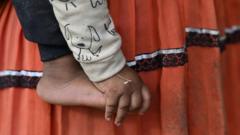
Colombia enacted legislation last week prohibiting female genital mutilation, marking a significant development in Latin America where the practice had not been previously criminalized. The unanimous passage of the bill culminated efforts by activists, lawmakers, and members of affected communities who have worked to eradicate the procedure.
Carla Quiñonez, a 30-year-old activist from Colombia’s Emberá Indigenous community, played a central role in the campaign leading to the ban. Her involvement stems from personal experience: her daughter underwent the procedure at six months old without her knowledge when left in the care of her great-grandmother. The infant developed a fever, swelling, and bleeding, prompting Quiñonez’s mother, a midwife, to attempt pain relief using traditional remedies. Quiñonez later recognized that the practice occurred secretly within her community and began investigating cases she had previously misunderstood as unexplained infant deaths attributed to what community members called “jai,” an ancestral illness.
According to health data, 240 cases of female genital mutilation were documented in Colombia between 2020 and June 2026, with the vast majority of victims under age six. Medical professionals, including pediatrician Diana Ramos Mosquera at San Jorge University Hospital, indicate the recorded figures likely represent only a fraction of actual cases. The procedure carries serious medical risks, including hemorrhaging, infection, and long-term complications affecting menstruation, sexual function, and childbirth. The World Health Organization estimates that over 230 million girls and women globally have experienced the practice, predominantly in Africa.
The Emberá Nation, one of Colombia’s largest Indigenous groups with approximately 300,000 members, maintains this practice despite its rarity elsewhere in Latin America. Theories regarding its origins include transmission through enslaved African populations and cultural beliefs linking the clitoris to masculinity or sexual promiscuity. Juliana Domico, legal representative of the Emberá Nation’s confederation, emphasized that the practice should not be characterized as cultural tradition, stating that authentic culture encompasses clothing, crafts, dances, and language rather than harmful practices.
Implementation challenges remain significant. Language barriers prevent some Emberá women from accessing healthcare or participating in policy discussions conducted in Spanish. Quiñonez has encountered medical discrimination and threats from community members opposing the change. Despite these obstacles, conversations within the community regarding discontinuation of the practice are occurring, with some participants expressing willingness to reconsider traditions previously considered mandatory.
Article Attribution | Read More at Article Source
Article summary produced by Claude AI