

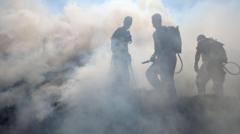
A fire that burned for more than a month in the Cairngorms region destroyed approximately 2,500 hectares of moorland and forest, with impacts felt as far away as Aberdeen. The incident led to village evacuations and demonstrated the vulnerability of the landscape to uncontrolled blazes. A week after firefighters departed, isolated hot-spots continued emerging across the charred terrain, requiring ongoing suppression efforts.
The RSPB Scotland, which manages the affected Loch Garten and Abernethy nature reserve, has identified four key areas for land management improvements to reduce fire risk. These include establishing wider fire breaks along forest trails using vegetation removal techniques, creating ponds and wetland areas as water sources for fire suppression, restoring degraded peatlands to increase moisture retention, and transitioning woodlands toward broadleaved species that are less flammable than pine trees. Peatland restoration has emerged as particularly significant, with research showing that properly restored wetlands can effectively limit fire spread, as demonstrated during a 2019 fire near Melvich where re-wetted peatland suffered only superficial damage.
Scotland’s chief fire officer recently issued an open letter calling for improved wildfire planning and a more formal fire safety regime for rural land management comparable to urban business standards. This comes as the Scottish government finalizes licensing requirements for muirburn, the controlled burning of heather on moorland traditionally managed for grouse shooting. While conservation organizations dispute that ecological restoration leaves areas more vulnerable to fires, there is growing consensus that vegetation fuel loads require active management.
Several approaches to vegetation control are being employed, including cattle grazing and mechanical cutting of grass, gorse, bracken and heather. Some sporting estates are finding common ground with conservation groups on land management practices, with certain proprietors embracing elements of ecological restoration alongside traditional uses. Experts suggest that shifting focus toward wildfire prevention could unite different land management philosophies around shared objectives.
Article Attribution | Read More at Article Source
Article summary produced by Claude AI