

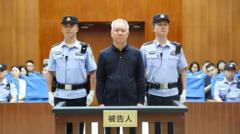
Hui Ka Yan, the founder of Evergrande, received a life prison sentence and complete forfeiture of personal assets following his guilty plea to charges including embezzlement and corporate bribery. The Shenzhen Intermediate People’s Court additionally levied combined fines of 15.82 billion yuan against his former companies for violations such as falsifying records and concealing debt.
The sentencing represents a significant milestone in the consequences stemming from Evergrande’s financial collapse, which had substantial ripple effects across China’s real estate sector and created losses for investors and domestic financial institutions. According to the court, Hui’s business operations and those of his companies caused serious disruption to the Chinese property market. Multiple other Evergrande executives also received jail sentences ranging from 22 months to 18 years.
Hui rose from poverty in rural China to become Asia’s wealthiest individual at one point, establishing Evergrande in 1996 and expanding it into the nation’s largest real estate developer through debt-fueled acquisition strategies. The company achieved a market valuation exceeding $50 billion. However, regulatory interventions introduced in 2020 targeting property sector leverage created significant difficulties for the enterprise. Unable to manage debt obligations, Evergrande sold properties at steep discounts before ultimately collapsing. The company misappropriated millions in pre-sale deposits intended for construction, redirecting funds toward new developments and leaving hundreds of projects incomplete.
In March 2024, Hui faced additional penalties including a $6.5 million fine and permanent exclusion from China’s capital markets after his company was found to have overstated revenue by $78 billion. Evergrande’s market value declined by 99 percent, and the company’s shares were delisted from Hong Kong exchange in August 2025 following more than a decade of trading. The developer’s failure has been widely attributed to accelerating a broader slowdown in China’s property market, an industry that represented approximately one-third of gross domestic product and served as a primary economic growth engine.
Article Attribution | Read More at Article Source
Article summary produced by Claude AI