

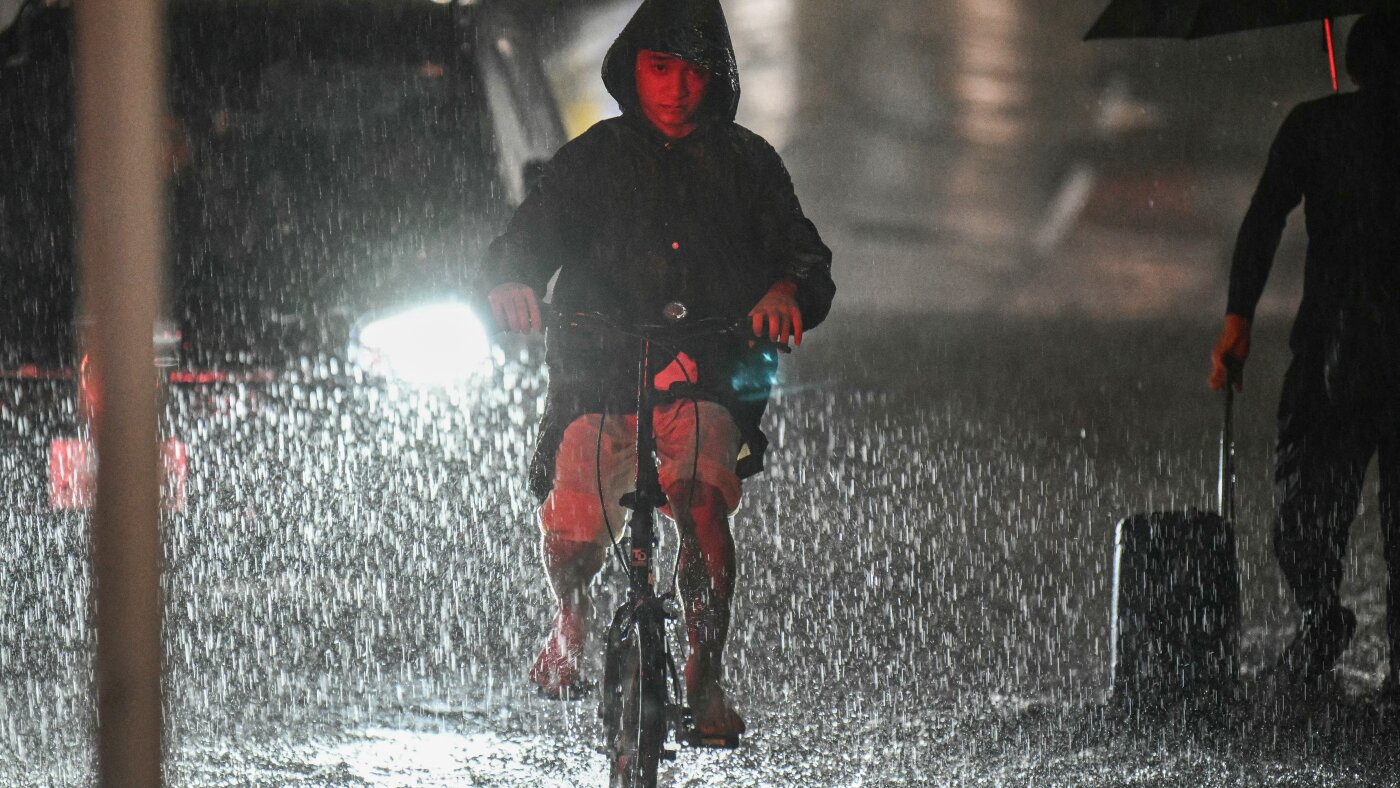
Japan faced severe weather impacts on Aug. 13, 2026, when torrential rainfall struck the area east of Tokyo, resulting in widespread flooding and at least eight fatalities. The precipitation was exceptionally heavy, with certain regions of Chiba prefecture receiving three times their typical monthly rainfall in a single half-day period. The flooding prompted evacuation orders affecting more than 100,000 residents, with about 40 percent of prefectures, cities and towns experiencing inundation. Power outages affected more than 20,000 households, and several deaths occurred when individuals became trapped in submerged vehicles on flooded roads.
Transportation infrastructure sustained significant disruption, with trains and highways closing and thousands of travelers stranded at Narita International Airport serving the Tokyo region. The timing was particularly disruptive, as the flooding occurred during the Obon holiday period when many Japanese residents travel for festivals and family gatherings.
Simultaneously across Europe, an intense heat wave was affecting approximately 300 million people, representing more than half the continent’s population. This marked Europe’s fifth heat wave of the summer season, with meteorologists noting the event was proving longer-lasting than the deadly 2003 heat wave that claimed tens of thousands of lives. In France, Italy, and Spain, roughly 92 million people experienced temperatures exceeding 95 degrees Fahrenheit in urban centers largely lacking air-conditioning infrastructure. The severe heat followed major wildfires that had struck France and Spain in the preceding week, with drought conditions prompting water restrictions across nearly 70 percent of France and affecting the country’s nuclear power generation capacity.
The extreme heat and drought produced secondary effects across the region. In Italy, reduced water levels in the Tiber River exposed remains of Nero’s Bridge. Romania initiated shutdown of its second nuclear reactor at Cernavoda when low Danube water levels compromised cooling capacity, while Hungary announced policy initiatives addressing disruptions from reduced Danube water levels. In the United Kingdom, temperatures reached 100 degrees in parts of southern England, with wildfires occurring in typically vegetated areas like the New Forest and West Midlands. Water companies cautioned residents about potential supply shortages within six weeks, and drought conditions were declared across three-quarters of England and all of Wales.
Article Attribution | Read More at Article Source
Article summary produced by Claude AI