

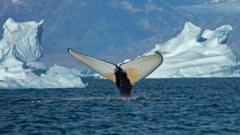
A long-term research study has documented a significant shift in marine wildlife patterns along East Greenland’s coast as warming temperatures eliminate seasonal sea ice. The research, combining ship-based surveys, aerial observations, and satellite tracking data, reveals that humpback, fin, and minke whales are now regularly inhabiting waters where they were historically absent.
The scale of change is substantial. Ship surveys recorded no humpback whale sightings in the region until 2006, but by 2024, researchers documented 150 sightings. Systematic aerial surveys conducted in 2015 and 2024, combined with data from 15 satellite-tagged whales and input from local Inuit hunters, provided a comprehensive picture of the transformation. During the summer of 2024 alone, an estimated 4,000 humpback whales, 6,000 fin whales, and 6,000 minke whales visited the Greenland Sea.
The ecological shift is driven by warming sea temperatures and increased food availability. These whale species are feeding on fish and krill that have migrated into the newly accessible waters. Scientists estimate that the three whale species together consume at least 800,000 tonnes of fish and krill during summer feeding periods. Lead researcher Mads Peter Heide-Jørgensen from the Greenland Institute of Natural Resources characterized the changes as “probably the most radical” environmental shift visible in subarctic regions.
However, the transformation presents mixed consequences for Arctic ecosystems. While these baleen whales appear to be adapting and potentially benefiting from the changing conditions, other Arctic species face threats. Narwhals and belugas are experiencing habitat overlap with the larger whales or being displaced entirely. The research does not definitively establish whether the whale populations are expanding overall or simply redistributing from other regions, a distinction relevant to discussions about whale hunting in Greenland.
Article Attribution | Read More at Article Source
Article summary produced by Claude AI