

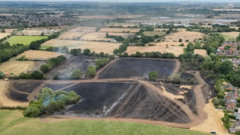
A series of significant grassfires have swept through protected areas, farmland, and nature reserves across the United Kingdom in recent weeks, leaving conservationists and land managers facing considerable restoration challenges. Staffordshire Fire and Rescue Service reported handling approximately 600 outdoor fires in July, roughly double the previous year’s figure for the same month. Notable affected areas include Portway Hill in the West Midlands, Cannock Chase, Dunwich Heath in Suffolk, and a fire in the Cairngorms National Park in Scotland that burned approximately 10 square miles of moorland and forestry.
Wildlife experts have outlined the cascading ecological consequences of these fires. When vegetation is destroyed, invertebrate populations lose food sources and habitat, which subsequently affects birds and mammals dependent on those insects. At Portway Hill, rare plants including pyramidal orchids, bee orchids, and a marbled white butterfly colony were lost, with specialists estimating it will take years to restore conditions suitable for these species’ return. Similar impacts have been documented across multiple reserves, with some conservation projects representing decades of accumulated restoration work now undone.
Recovery efforts are possible but require sustained commitment. Conservation organizations are pursuing habitat restoration through meadow seeding and tree planting, as well as implementing resilience-building measures such as planting native broadleaf trees to create cooler woodland environments and restoring wetlands to maintain soil moisture. Evidence from Wild Ken Hill in Norfolk, which experienced a fire in 2022, suggests that vegetation can regenerate relatively quickly and wildlife can progressively recolonize affected areas, though full ecological recovery involving soil fungal restoration and mature woodland regrowth can require decades.
Experts emphasize that prevention represents the most effective strategy moving forward. Fire management specialists highlight that the majority of wildfires result from human activity, including unattended barbecues, discarded cigarettes, and unextinguished campfires. As climate change creates hotter, drier conditions increasingly conducive to fire spread, wildlife conservation groups stress the importance of behavioral changes alongside landscape management interventions to protect already vulnerable British wildlife populations.
Article Attribution | Read More at Article Source
Article summary produced by Claude AI