

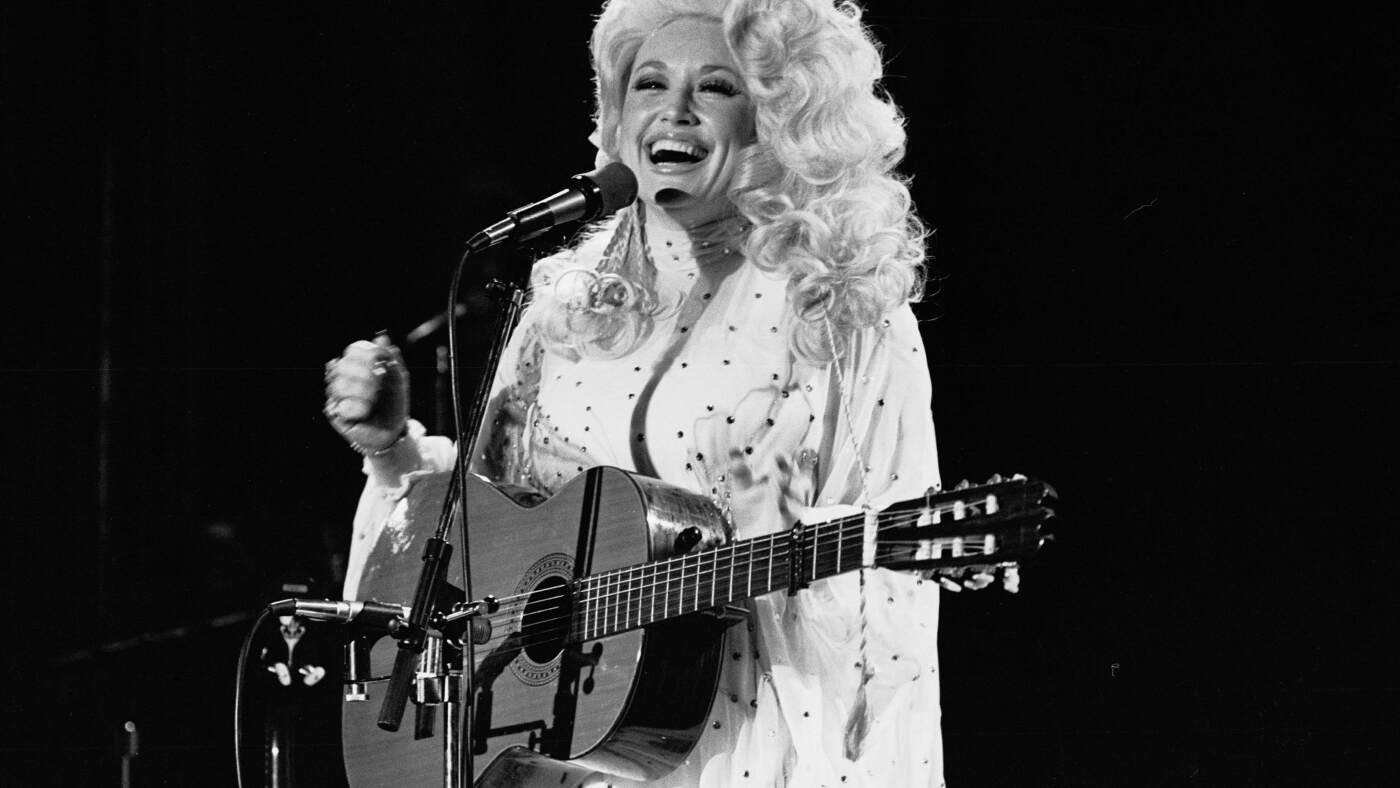
Dolly Parton’s passing marked the end of an era for American popular culture. Throughout her career spanning multiple decades, Parton achieved rare status as both a mainstream musical sensation and a songwriter whose catalog functioned as a commentary on the nation’s social transformations, particularly regarding women’s roles and experiences.
Parton’s artistic journey began in the mid-1960s when significant shifts were occurring across American society. Her early work established a dual perspective that would define her career: songs of female empowerment combined with reverent explorations of working-class and rural life. Her 1967 single “Dumb Blonde” presented an uncompromising vision of women’s liberation, while 1971’s “Coat of Many Colors” documented Appalachian poverty with dignity and nuance. These compositions, along with subsequent releases like “Touch Your Woman” and “My Tennessee Mountain Home,” revealed Parton’s sophisticated understanding of American cultural dynamics. Notably, Parton composed most of her greatest songs independently, a distinction rare among Nashville songwriters of her era.
Parton’s legendary status solidified with “Jolene” in 1973, a song that transcended its specific moment through its exploration of romantic rivalry and desire. The track’s accessibility—featuring a melody rooted in folk tradition and a chorus designed for universal appeal—allowed diverse artists to interpret and reinterpret it. Later renditions, including Jack White’s version and Beyoncé’s recording on her country album, demonstrated the song’s enduring flexibility and cultural relevance.
The following year brought “I Will Always Love You,” which Parton initially conceived as a farewell to her professional partner Porter Wagoner. The composition’s openness to interpretation and emotional resonance enabled it to achieve multiple waves of success, culminating in Whitney Houston’s 1992 rendition, which transcended established radio format divisions and became a defining expression of popular music during that era.
Beyond these megahits, Parton’s broader catalog chronicled the emergence of the modern professional woman navigating work, independence, and personal relationships. Her songwriting throughout the 1970s and 1980s captured the aspirations and challenges of her contemporary moment while maintaining artistic qualities that ensured lasting cultural significance.
Article Attribution | Read More at Article Source
Article summary produced by Claude AI