

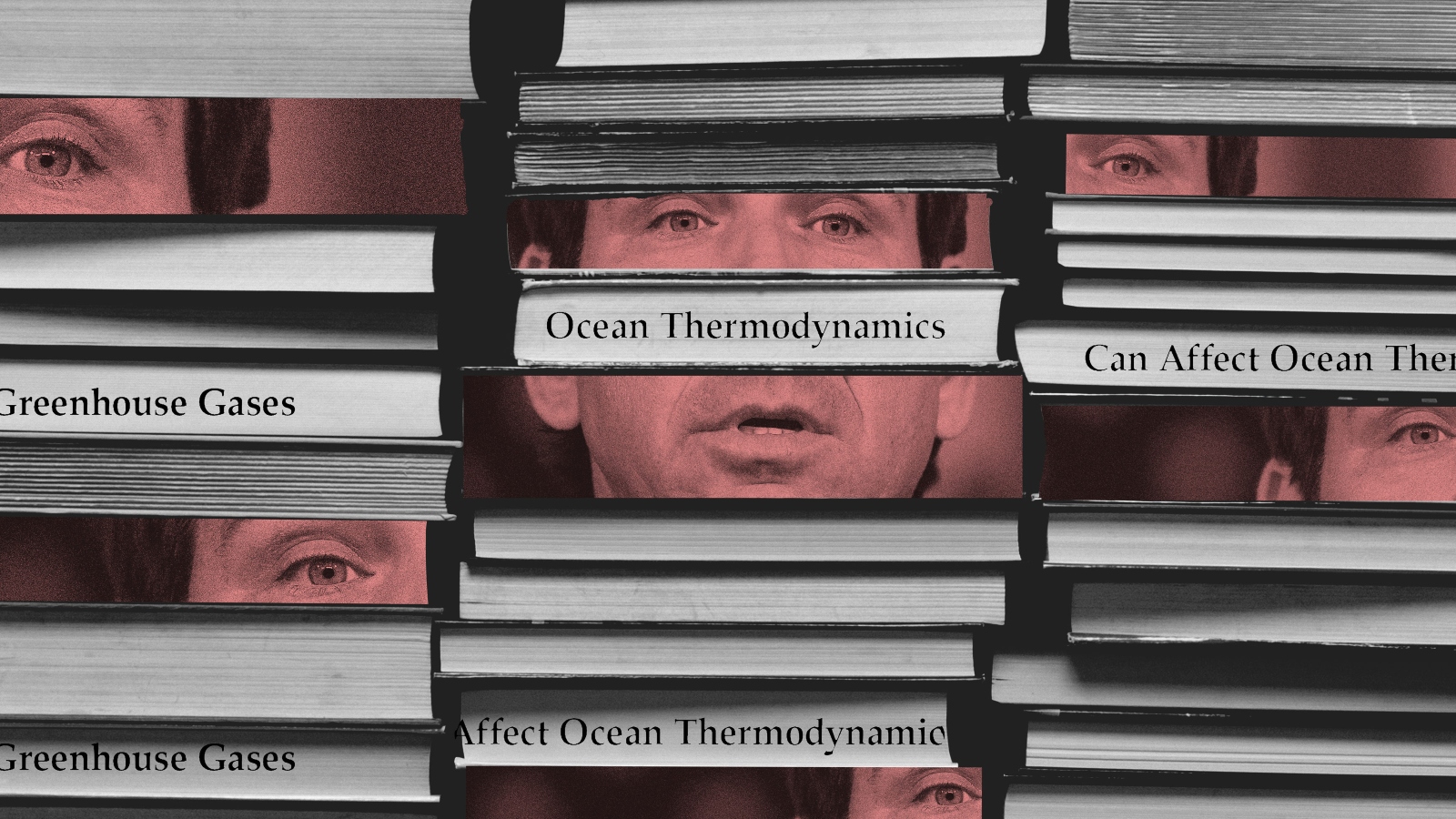
Florida education officials asked science textbook publishers to modify content related to climate change during the summer of 2024, according to an investigation by WUSF and The Hechinger Report. In McGraw Hill’s Marine Science textbook, references to specific mortality figures from climate change were replaced with more general language about environmental impacts. A Cengage environmental science text removed the word “polluting” when describing coal-burning power plants and eliminated a reference to university students voting on renewable energy initiatives. According to Glenn Branch, deputy director of the National Center for Science Education, these modifications went beyond what was necessary to align with state academic standards.
Florida’s existing science standards, adopted in 2008, mandate that students learn about human-caused climate change in multiple high school electives including earth science, marine science, and environmental science. However, the state is currently updating its science standards for the first time since then, and it remains unclear whether the updated version will include climate change education. State education officials declined to comment on whether climate instruction will be maintained in any courses.
The textbook revisions occur within a broader political context. Gov. Ron DeSantis officially removed references to climate change from state statutes in May 2024. Under the DeSantis administration, state education policies have increasingly restricted discussion of certain topics, including diversity initiatives and systemic racism in legal systems. Science teachers interviewed for the investigation described a “culture of caution” where administrators discourage discussion of topics deemed controversial, though outright classroom bans on mentioning climate change are not formal policy. Several educators requested anonymity due to concerns about potential professional consequences.
Publishers and state officials defended the changes. The Florida Department of Education stated that its review process follows state law and academic standards. McGraw Hill’s communications director characterized the edits as routine adjustments to align with local requirements while maintaining content accuracy, contending that climate change and its environmental impacts remain fully covered in the materials. However, Michael Huber, an author of McGraw Hill’s Marine Science, stated he was not informed of the modifications and found them problematic upon learning of their nature.
Article Attribution | Read More at Article Source
Article summary produced by Claude AI