

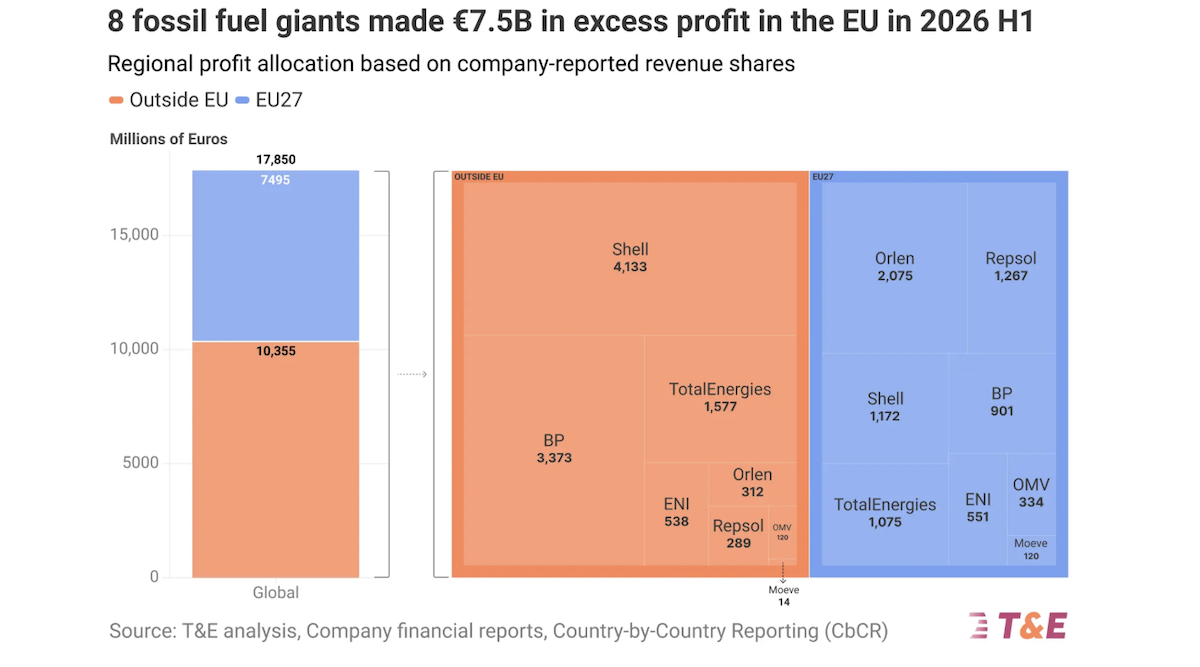
Eight major oil companies—Shell, BP, TotalEnergies, Eni, Orlen, Repsol, OMV, and Moeve—generated approximately €7.5 billion in excess profits across Europe during the opening half of 2026, according to an analysis examining windfall gains tied to rising energy prices.
The escalation of regional conflict beginning on 28 February 2026 triggered a sharp increase in oil benchmarks, with Brent crude climbing above $100 per barrel within weeks. This price surge corresponded with elevated earnings reported by European petroleum firms. To quantify these additional gains, researchers employed a conservative methodology comparing adjusted net income figures between corresponding quarters in 2026 and 2025, thereby accounting for seasonal variations without requiring assumptions about baseline profitability levels.
The analysis identified approximately €1.6 billion in excess profit attributable to the EU27 during the first quarter of 2026, which contained only one month of conflict, followed by €5.9 billion in the second quarter, the first full quarter following the February escalation. The disparity between quarterly figures reflects the extended wartime impact on prices and company results.
To allocate profits to specific geographic regions, researchers utilized companies’ Country-by-Country Reporting data on revenues rather than relying on where accounting profits were formally booked, acknowledging that petroleum companies can strategically shift reported earnings across different jurisdictions for tax purposes. This methodology restricted the scope to the eight firms that publicly disclose sufficient geographic breakdown of their financial activities.
The analysis concludes that excess profits stemming from revenues generated within EU27 markets represent a potential target for policy intervention through a permanent windfall taxation mechanism, provided such a measure incorporates appropriate design safeguards.
Article Attribution | Read More at Article Source
Article summary produced by Claude AI