

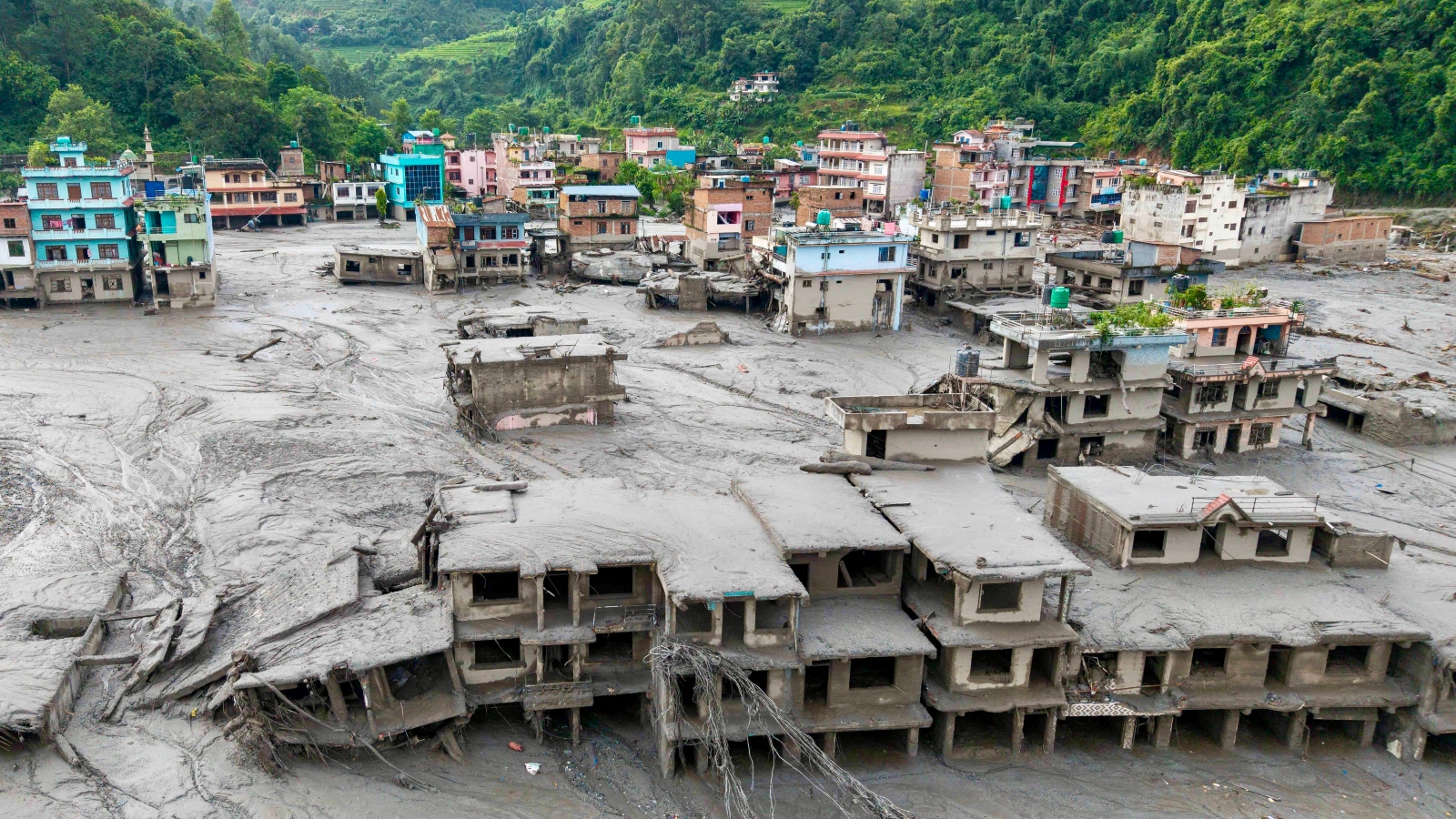
A catastrophic flooding event occurred on Wednesday in a mountainous region on the border of Nepal and Tibet, resulting in approximately 160 deaths and hundreds of missing persons, including dozens of international tourists. Satellite imagery and government reports indicate the flooding was triggered when a large piece of glacier fell hundreds of feet, causing a landslide in the valley below.
Research indicates that warming temperatures are making glaciers in the region increasingly unstable. Since 2000, glaciers worldwide have lost 5 percent of their ice, with more severe impacts in specific areas. Nepal’s glaciers experienced particularly dramatic changes, losing nearly a quarter of their area between 1970 and 2010, and more than 160 smaller glaciers in the country have disappeared entirely. A recent study suggests that 40 percent of the world’s glacial ice could vanish if global warming continues above 1.5 degrees Celsius.
Geologists analyzing satellite imagery reported that a piece of ice approximately 2,000 feet wide may have collapsed nearly 4,000 feet, generating enough force to pulverize the ice into water. The impact was so significant it registered as a magnitude 5.2 seismic event according to the U.S. Geological Survey. One geologist noted that snow previously on the glacier may have melted due to warm temperatures earlier in the week, though conclusive statements about causation were still pending.
Warmers temperatures create multiple interconnected effects that destabilize glaciers. Retreating glaciers can trigger landslides as they shrink and lose their ability to hold back sediment. Additionally, melting glaciers often leave large dammed lakes at higher elevations; when landslides occur into these reservoirs, the resulting overflow can cause catastrophic collapses known as glacial lake outburst floods. Similar glacier-related disasters have occurred elsewhere, including a Swiss glacier collapse last year and an Italian glacier collapse in 2022 that killed 11 mountaineers, both linked to rising temperatures.
Article Attribution | Read More at Article Source
Article summary produced by Claude AI