

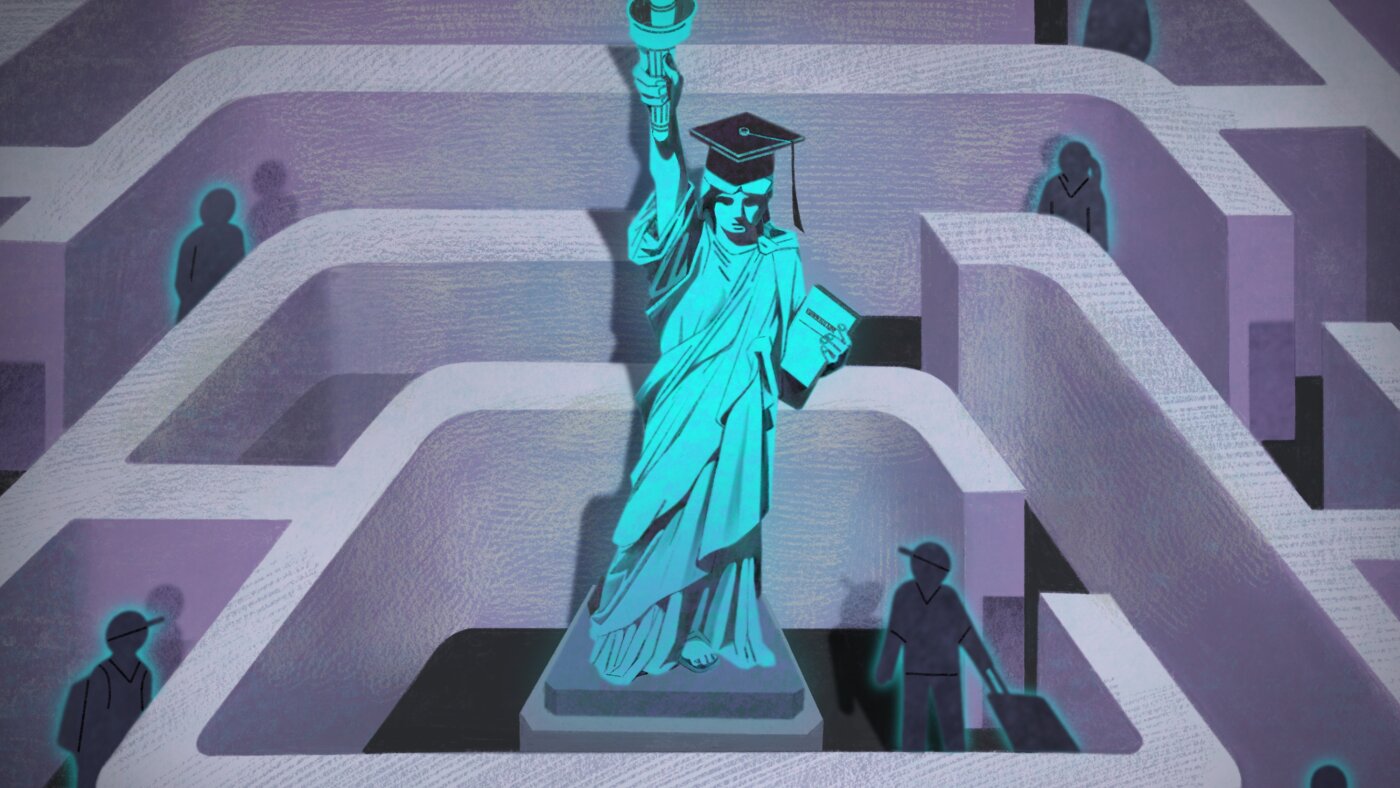
The Department of Homeland Security has announced new regulations affecting international students studying in the United States, introducing significant changes to how student visas operate. The policy implements fixed time limits on F and J visas, caps most international students at four years of authorized stay, and requires students to apply for extensions with associated fees if additional time is needed. Students will also face restrictions on changing majors or transferring schools during their first year, and the post-graduation grace period for visa holders has been reduced from 60 days to 30 days.
Homeland Security Secretary Markwayne Mullin framed the changes as a national security measure targeting what the department characterizes as “forever students” who intentionally prolong their academic pursuits. However, data shows that the suspected in-country overstay rate among student visa holders stood at 2.45% in 2024, and the department has not provided clear evidence of widespread intentional visa abuse. Historically, students on F and J visas could remain in the country indefinitely as long as they maintained academic progress and compliance with visa requirements.
Higher education institutions have expressed significant concerns about the policy’s practical implications. Universities highlighted that numerous graduate programs, including medical degrees and doctoral studies, routinely require more than four years to complete. Vanderbilt University noted that the average Ph.D. completion time exceeds 5.75 years, meaning nearly all of its 528 international doctoral students could face interrupted educations. International students typically contribute substantial revenue to universities through full tuition payments and play key roles in research and innovation across multiple academic disciplines.
Education advocates have criticized the restrictions as counterproductive to American competitiveness. Fanta Aw, executive director of NAFSA: Association of International Educators, characterized the move as misguided bureaucracy occurring at a time of increased global competition for international talent. Critics also noted that restrictions on program changes contradict a fundamental appeal of American higher education—its flexibility for students to explore interdisciplinary interests.
The rule takes effect in mid-September, though fall enrollment cycles will have already begun at most institutions. Universities including Carnegie Mellon are planning information sessions to address student concerns and determine implementation strategies for their international student populations and graduate research programs.
Article Attribution | Read More at Article Source
Article summary produced by Claude AI