

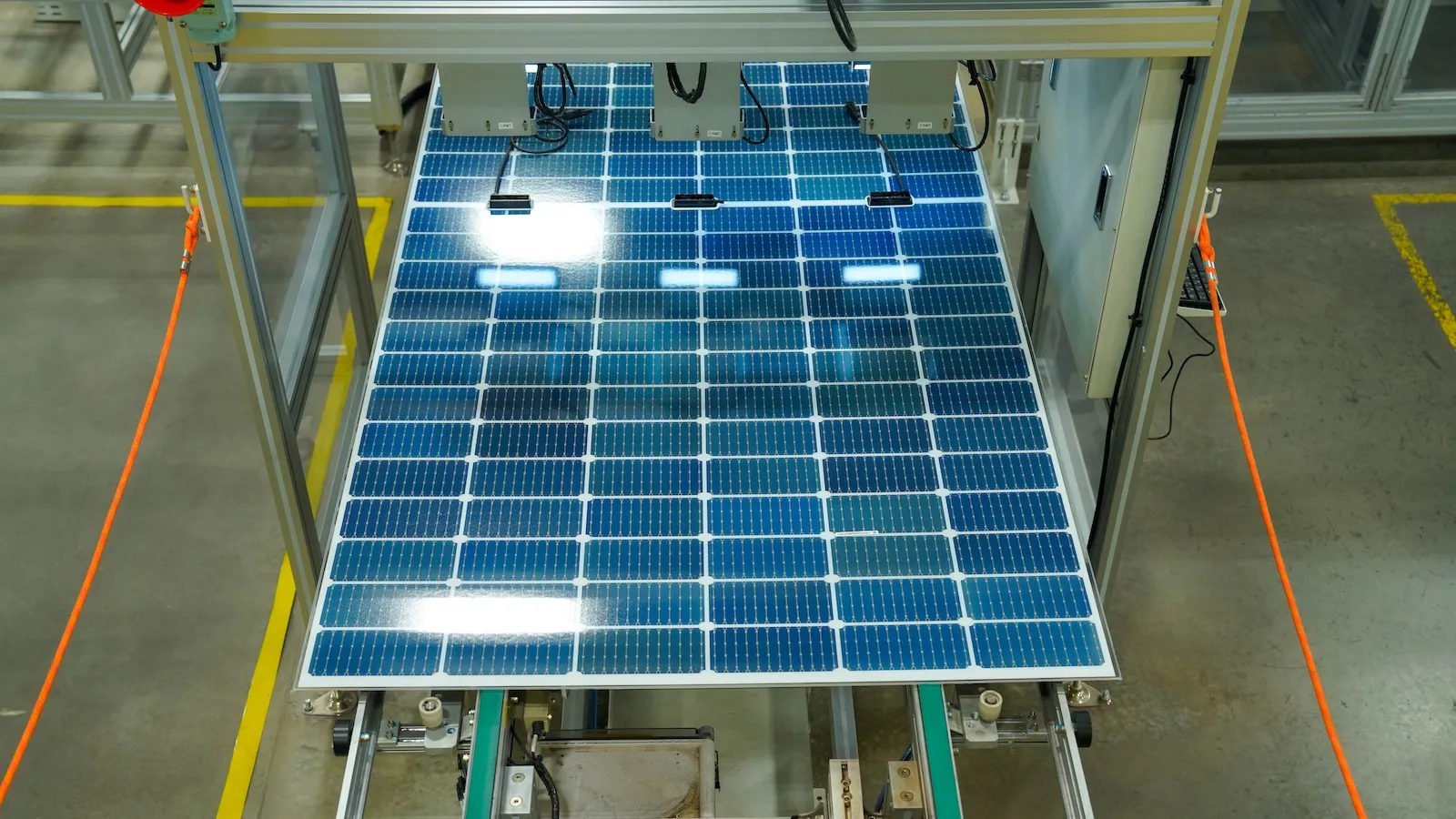
Qcells, a South Korean manufacturer, operates a major solar panel production facility in Cartersville, Georgia that recently expanded to conduct the entire manufacturing process domestically. The facility, which began its expansion in June, represents a significant milestone for U.S. solar industry efforts to reduce dependence on Chinese panel manufacturing that has dominated global markets since the 2010s.
The company’s investment decisions have been shaped by competing policy frameworks from successive administrations. The Biden administration’s 2022 Inflation Reduction Act provided tax credit incentives for solar projects using domestically manufactured panels, encouraging Qcells’ substantial capital investment in the Georgia facility. In contrast, the Trump administration has adopted a restrictive approach, including tariffs and minimum import prices on polysilicon scheduled to take effect in December, along with restrictions on foreign-owned solar companies operating within the U.S. market.
Industry analysts characterize the shifting policy landscape as creating substantial uncertainty for manufacturers and developers. While protectionist measures may advantage established domestic producers like Qcells, the frequent policy reversals create challenges for companies with limited capital and less favorable investment timing. Smaller manufacturers and developers face particular difficulty navigating supply chain changes and cost pressures.
The solar sector continues expanding despite policy volatility, with solar and storage representing 90 percent of new electrical generation capacity added to the U.S. grid in the first quarter of the year. However, new tariffs and pricing controls on polysilicon could increase costs for developers while reducing reliance on imports. Industry observers note that questions regarding solar’s future center not on whether development will continue, but rather on development speed, costs, and manufacturing location.
Article Attribution | Read More at Article Source
Article summary produced by Claude AI