

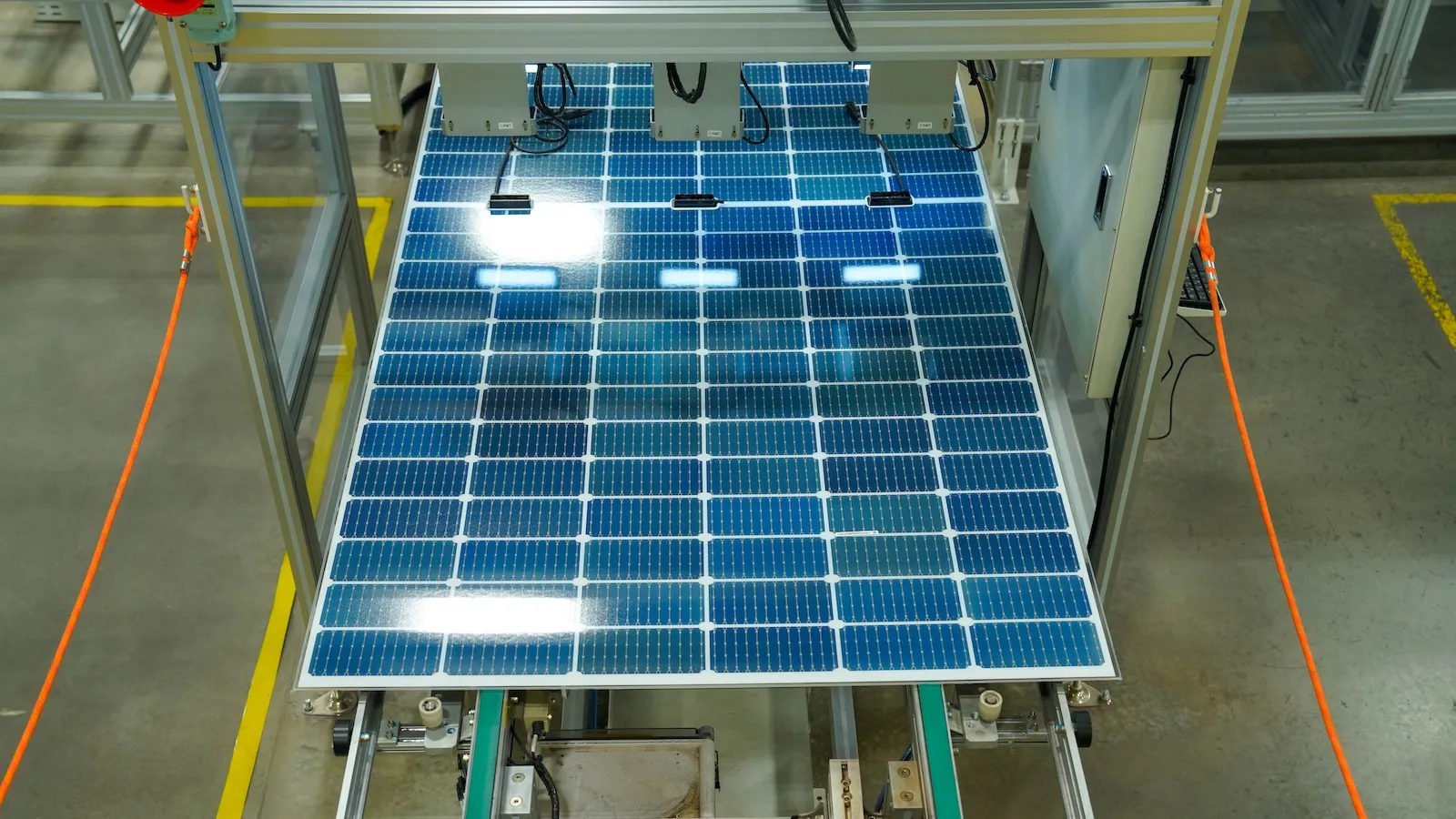
Qcells, a South Korean solar manufacturing company, has expanded its Cartersville, Georgia facility to bring the entire solar panel production process under one roof, marking a significant step in rebuilding domestic solar manufacturing capacity. The facility, which began its expansion in June, represents a substantial investment in U.S. infrastructure as the industry works to reduce reliance on Chinese-dominated global solar markets.
The U.S. solar industry has experienced substantial policy shifts that have created both opportunities and challenges for manufacturers. The Biden administration’s Inflation Reduction Act of 2022 offered tax credit bonuses for solar projects using U.S.-made panels, incentives that Qcells cited as a major factor in their investment. The Trump administration has taken a different approach, revoking most tax credits through the One Big Beautiful Bill Act while implementing new tariffs and minimum import prices on polysilicon set to take effect in December. Industry analysts note these opposing strategies share the same underlying goal of supporting domestic production but have created uncertainty for companies planning long-term investments.
The policy volatility has created ripple effects throughout the sector. In the first quarter of this year, nearly $13 billion in clean energy investments were abandoned, though approximately $18 billion in new projects were announced as companies rushed to meet expiring tax credit deadlines. New tariffs and import restrictions could increase costs for developers while supporting U.S. manufacturers, creating a complex landscape where many companies will likely continue depending on imports despite higher expenses.
Despite these headwinds, industry experts remain optimistic about solar’s long-term prospects. Solar represents one of the cheapest electricity sources available and accounted for 90 percent of new power generation added to the U.S. grid in the first quarter of this year. The central questions facing the industry involve not whether solar development will continue, but rather the pace of growth, cost implications, and which domestic or international manufacturers will supply the market going forward.
Article Attribution | Read More at Article Source
Article summary produced by Claude AI