

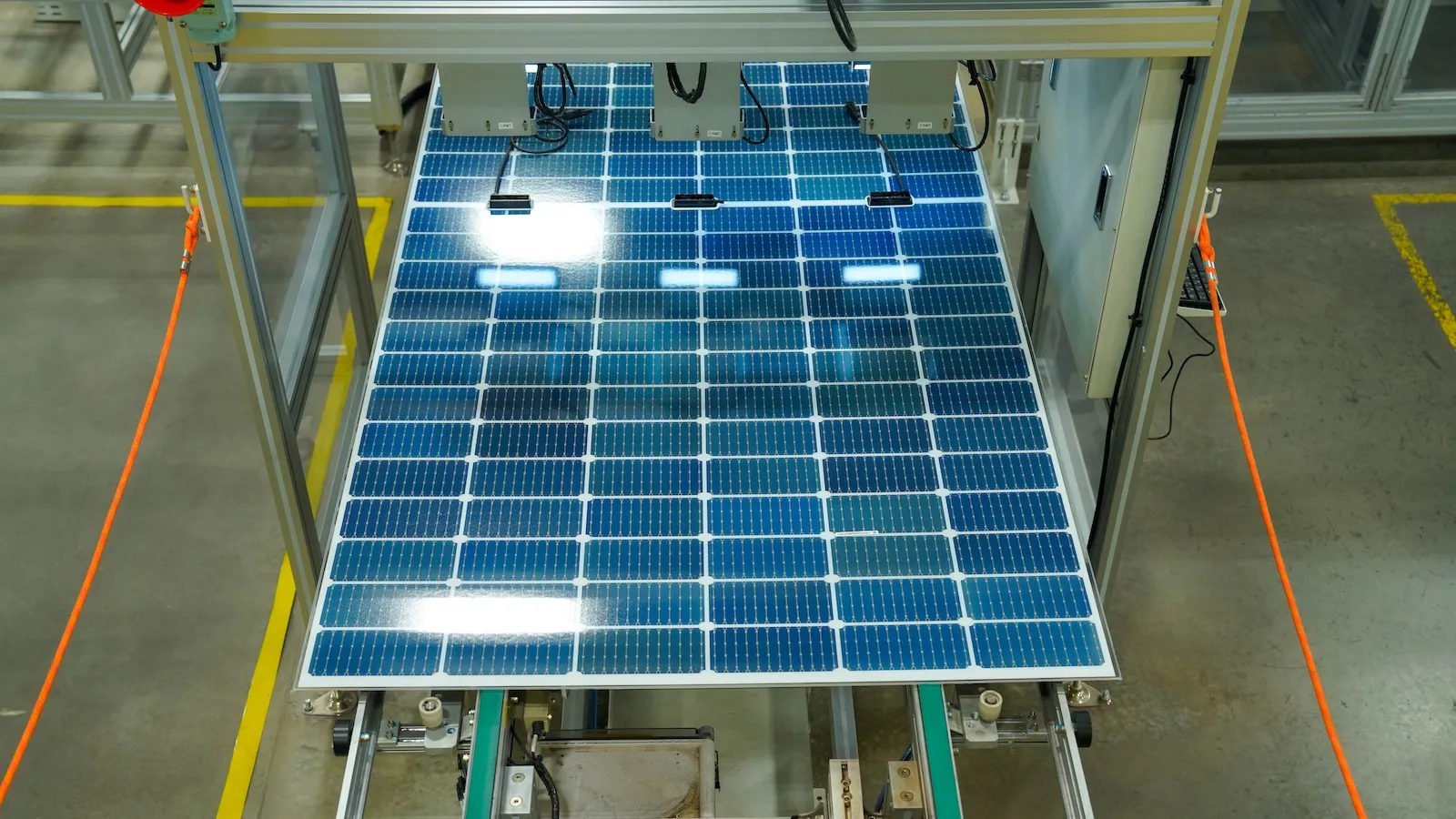
Qcells, a South Korean solar manufacturer, began a significant expansion at its Cartersville, Georgia facility in June, moving from component assembly to complete integrated solar panel production. The $2.5 billion facility represents a milestone for efforts to bring solar manufacturing back to the United States, an industry dominated by Chinese producers since the 2010s.
The U.S. government has pursued solar manufacturing growth through different policy mechanisms under successive administrations. The Biden administration offered financial incentives through tax credit bonuses in the Inflation Reduction Act, while the Trump administration is employing tariffs and minimum import prices on polysilicon set to take effect in December. Industry analysts note both approaches aim to boost domestic production but have created uncertainty for manufacturers like Qcells, which made multibillion-dollar investments based on prior policy frameworks.
Policy volatility has had widespread effects across the solar sector. The elimination of most federal clean energy tax credits has prompted project cancellations, though companies rushed to meet previous credit deadlines, resulting in nearly $13 billion in abandoned investments alongside $18 billion in new projects announced in the first quarter of this year. The short-term impact extends to consumers and developers who may face higher costs as domestic supply constraints continue.
Despite policy fluctuations, solar energy remains economically competitive as one of the cheapest electricity sources available. Solar and storage accounted for 90 percent of new electrical capacity added to the U.S. grid in the first quarter. Industry experts emphasize that solar development will continue but acknowledge key uncertainties about deployment speed, costs, and production locations as policy frameworks continue to evolve.
Article Attribution | Read More at Article Source
Article summary produced by Claude AI