

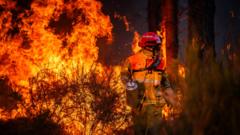
France experienced unprecedented wildfire damage earlier this summer, with scorched areas exceeding 300,000 acres—the largest toll since World War Two. The government’s interior ministry has announced 420 arrests of individuals suspected of starting fires either intentionally or through negligence, including 166 minors. Several defendants have already been convicted and sentenced, ranging from brief jail terms for accidental incidents like discarded cigarettes to lengthy sentences for alleged arson.
The prosecution strategy has drawn scrutiny from legal experts and media outlets questioning its severity and fairness. Some cases have been criticized as disproportionate, with homeless individuals and people with autism receiving jail sentences for minor infractions such as throwing cigarette butts. Lawyer Muriel Gestas, who has represented defendants in multiple cases, expressed skepticism about both the volume of arrests and the likelihood of convictions. Prosecutors defend the aggressive approach, arguing that current drought conditions create extreme fire risk from even minimal ignition sources.
Investigating fire origins presents significant technical challenges. Fire investigators map burn patterns and trace flames backward to their source, looking for evidence of deliberate intent through multiple ignition devices that might yield DNA or fingerprint samples. Experts estimate that arson accounts for only a fraction of wildfires, with most fires resulting from accidents involving construction work, faulty electrical equipment, cigarettes, and barbecues. Fire investigator Eric Dufayet explained that specific atmospheric conditions—sufficient temperature, low humidity, and modest wind speeds—determine whether common ignition sources can spread rapidly.
Psychiatrists and legal specialists point to three categories of fire starters: careless individuals, those seeking financial gain through insurance or employment benefits, and people with pyromania, an extremely rare psychiatric condition. Concerns have also been raised about potential motives among firefighters accused of arson. Critics of the government’s response note insufficient information on prosecution details and charge specifications, making it impossible to compare arrest rates with previous years. Meanwhile, President Emmanuel Macron has called for national unity and announced plans for forest adaptation to climate change, deferring more detailed accountability discussions.
Article Attribution | Read More at Article Source
Article summary produced by Claude AI