

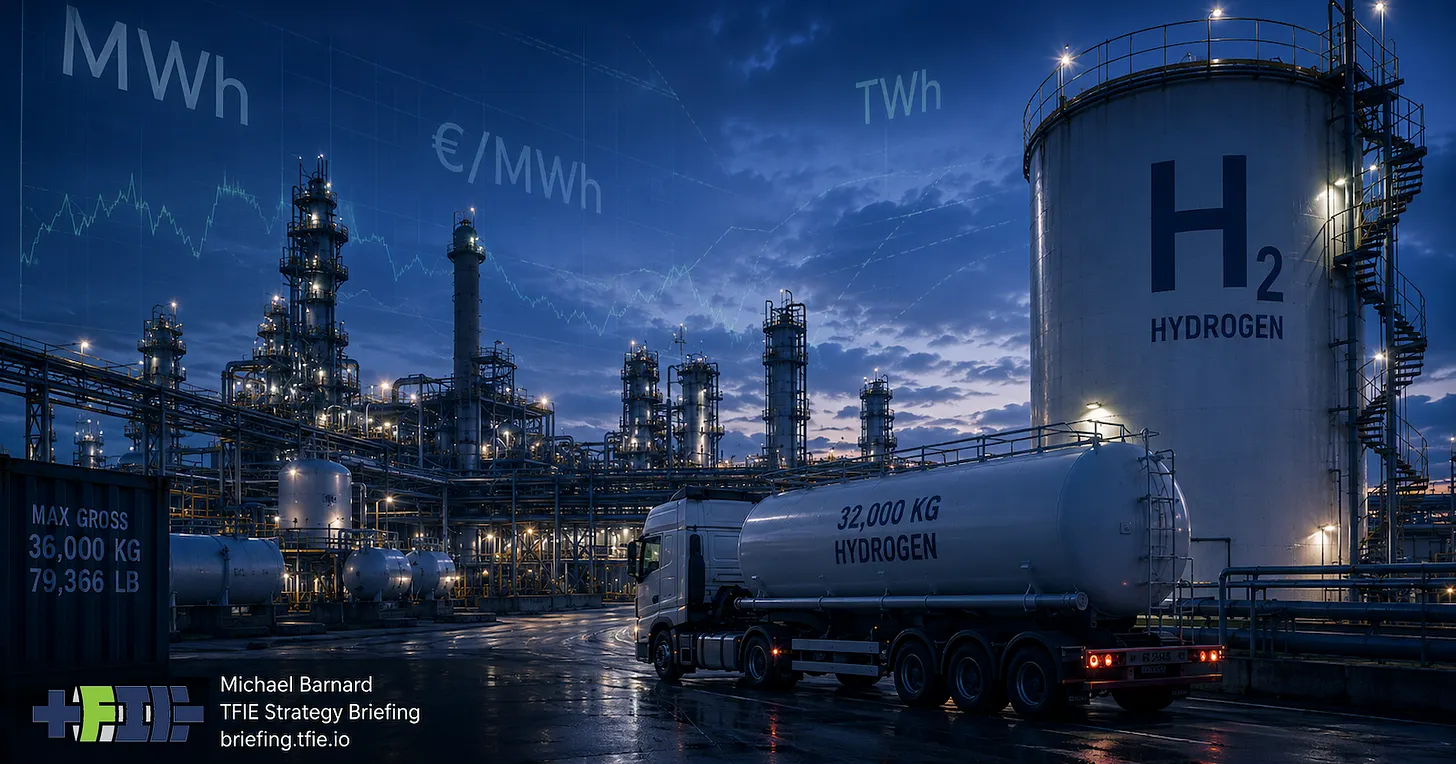
Global hydrogen consumption reached over 100 million tonnes in 2025, with the vast majority used in traditional industrial applications including petroleum refining, chemical production, and metallurgical processes. In these sectors, hydrogen functions primarily as a chemical input and feedstock rather than as an energy source, with purchasing decisions based on mass quantities rather than energy content measurements.
Analysts note that while hydrogen can be mathematically converted into megawatt-hour equivalents using its lower heating value of approximately 33.33 kWh per kilogram, this conversion presents analytical challenges when comparing hydrogen to electricity and natural gas markets. The European Energy Exchange’s HYDRIX methodology explicitly converts hydrogen prices into euros per megawatt-hour to enable direct price comparisons with electricity and gas. However, this framing may obscure fundamental differences between the commodities, as electricity is already in usable form for most applications, whereas hydrogen typically requires additional conversion equipment and processing before end use.
For emerging hydrogen applications in energy markets, analysts contend that demand projections should begin with actual customer needs rather than modeled energy volumes. Instead of assuming a specified hydrogen demand and working backward, the market analysis should start with specific industrial processes and applications, then determine whether hydrogen offers advantages over alternatives in terms of delivered cost, emissions reduction, infrastructure requirements and performance characteristics.
Investment evaluation should prioritize evidence of actual market demand over capacity announcements, according to the analysis. Meaningful indicators include documented tonne volumes sold, signed offtake agreements, plant utilization rates, delivered pricing and confirmed buyer requirements. Operating facilities with repeat customers and high capacity utilization provide stronger validation of genuine market development than policy targets or expansion announcements alone.
The distinction between hydrogen as an industrial molecule and hydrogen as an energy commodity remains central to assessing both market development and investment prospects in the sector.
Article Attribution | Read More at Article Source
Article summary produced by Claude AI