

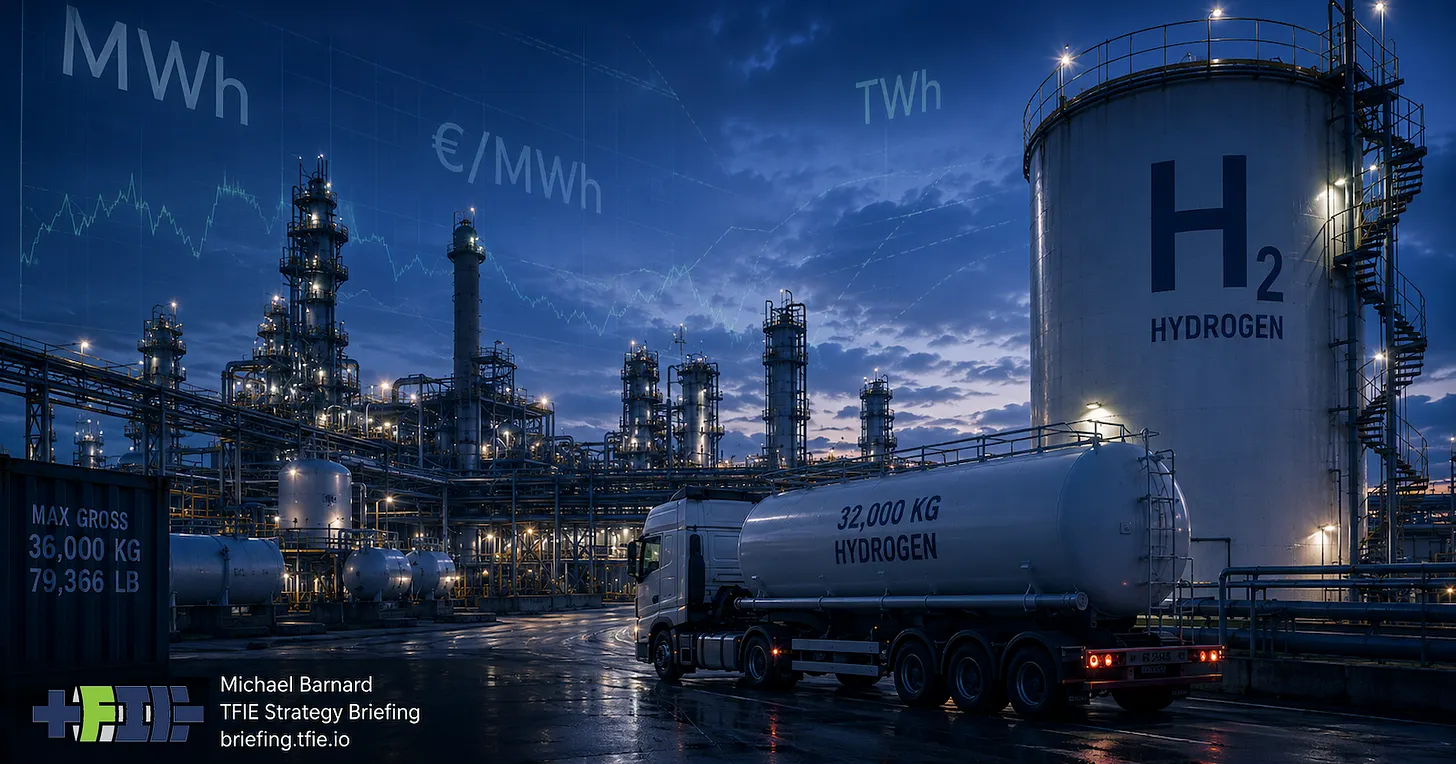
Global hydrogen demand exceeded 100 million tonnes in 2025, with the vast majority directed toward established industrial applications including oil refining and chemical manufacturing. These longstanding uses account for nearly all current hydrogen consumption, according to recent analysis of the market structure.
The dominant debate centers on how hydrogen should be measured and compared with other energy sources. While hydrogen’s energy content can be mathematically converted into megawatt-hours at a rate of approximately 33.33 kWh per kilogram, analysts argue this conversion creates analytical challenges. Electricity is measured in energy units because it serves as a final product, whereas hydrogen is primarily manufactured, transported and consumed as an industrial chemical feedstock. Expressing both commodities in comparable megawatt-hour terms can artificially position them as substitutable energy products before hydrogen has actually established itself in energy markets.
The European Energy Exchange’s HYDRIX methodology illustrates this issue explicitly. The exchange allows hydrogen pricing in euros per kilogram or euros per megawatt-hour, then converts benchmarks to euros per megawatt-hour to enable price comparisons with electricity and natural gas. While this approach supports price transparency for a developing commodity, it represents a specific analytical frame rather than a neutral unit conversion. When hydrogen is presented alongside electricity and gas prices in energy-equivalent units, the pricing comparison may suggest three comparable energy sources without accounting for functional differences in how each is deployed and the conversion losses involved in most applications.
Examiners of hydrogen markets recommend focusing on actual and projected industrial demand measured in tonnes rather than energy equivalents. This approach involves analyzing specific applications including refining, fertilizer production, methanol synthesis, and iron and steel manufacturing to determine which will expand or contract. For proposed energy applications such as heating, electricity generation or grid storage, the analytical sequence should begin with customer demand for specific services rather than assumed hydrogen volumes. Investment assessments similarly benefit from emphasis on actual tonnes sold, firm purchase agreements, facility utilization rates and evidence of genuine buyer requirements rather than announcement of electrolysis capacity alone.
Article Attribution | Read More at Article Source
Article summary produced by Claude AI