

A BBC investigation has identified at least 30 children, predominantly British, who may have been conceived through IVF treatment in northern Cyprus using donors different from those selected by their parents. The findings expand upon an earlier discovery of seven cases, with half of the children linked to Dogus IVF Centre. Parents involved in the cases report they carefully chose anonymous donors based on medical history, physical characteristics, personality, education, and other factors, but later became suspicious they did not receive the donors they paid for.
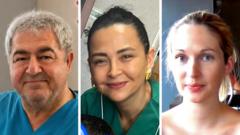
Three staff members at Dogus—Dr Firdevs Uguz Tip, Dr Sevket Alpturk, and patient coordinator Julie Hodson—were involved in care for many of these patients and are suspected by parents of providing misleading information. Dr Firdevs has denied involvement, while Alpturk and Hodson have not responded to inquiries. The investigation revealed that Cryos International, described as the world’s largest sperm bank, blacklisted Dogus in 2016. Northern Cyprus operates without European Union regulation and is only officially recognized by Turkey, creating an environment where clinics face minimal oversight despite marketing low costs and high success rates.
Of the 30 children involved, 11 have undertaken commercial DNA testing, with results showing genetic ancestry from Turkey or surrounding regions inconsistent with advertised Western European donors. Most children conceived at Dogus through DNA testing were born between 2012 and 2024. Families now face uncertainty regarding their children’s true biological origins and medical histories. When approached by the BBC, Cryos International stated it has no record of ever supplying sperm to Dogus, contradicting the clinic’s long-standing promotional claims about its relationship with the sperm bank.
One mother, identified as Rachel, selected treatment at Dogus in 2012 after finding the clinic welcoming and cost-effective at approximately €4,000. She chose an anonymous Danish donor identified as Ditto, whose profile indicated willingness for offspring contact at age 18. After 13 years of uncertainty and physical appearance inconsistencies, DNA testing confirmed Ditto was not her son’s biological father. The territory’s Ministry of Health launched an investigation following the initial BBC report earlier this year but has not provided additional information. The UK Foreign Office recently updated travel warnings advising that fertility treatment in northern Cyprus carries risks due to regulatory gaps.
Article Attribution | Read More at Article Source
Article summary produced by Claude AI