

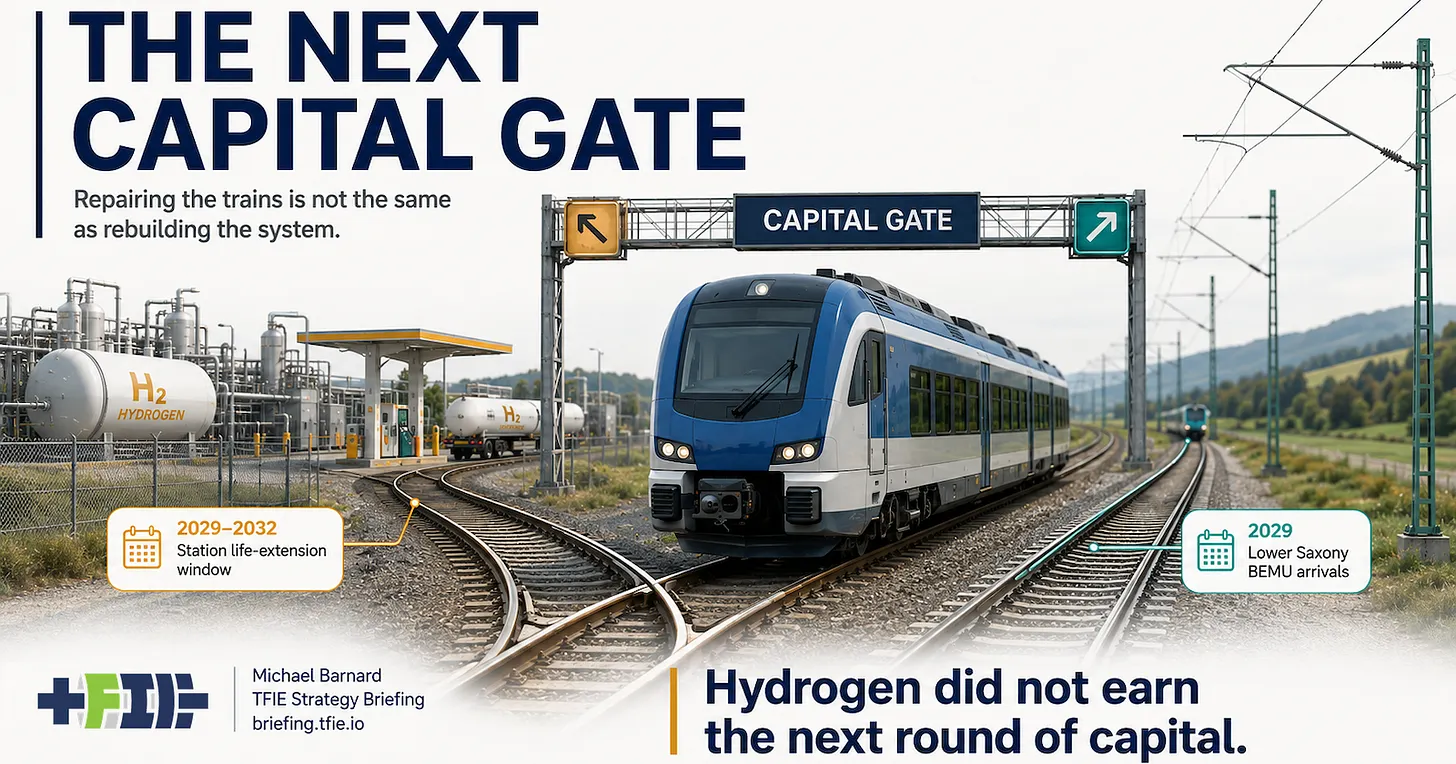
Lower Saxony operates a hydrogen train system that is approaching a critical decision point regarding its future. The state’s first significant battery-electric train fleet is expected to arrive between 2029 and 2030, while major maintenance costs for the hydrogen infrastructure will likely be required during the same period. This timing creates a practical comparison between continuing to invest in the hydrogen system and transitioning to battery-electric technology.
The hydrogen train program began with substantial capital commitments, including €81.3 million from Lower Saxony and approximately €8.4 million in federal funding, plus a 30-year maintenance and energy supply contract. A dedicated refueling station, estimated at €10 million, was built and is owned and operated by Linde. However, the system has experienced significant operational challenges. As of August 2025, only four of the 14 Coradia iLint trainsets were in service due to delayed arrival of replacement fuel-cell modules, with diesel trains covering some operational gaps. In April 2026, Alstom acquired Cummins’ rail fuel-cell operations, a transaction described as liability management rather than evidence of growing supplier commitment.
The hydrogen infrastructure presents additional economic pressures. The refueling station was engineered to handle approximately 1,600 kilograms of hydrogen daily across 12 passenger trains. With only four trains operating at the latest documented point, the system was running at roughly one-third of intended capacity. Fixed infrastructure costs for pressure vessels, compressors, controls and safety systems must be maintained regardless of throughput levels, creating unfavorable economics when the system operates below design capacity.
The environmental claims surrounding the program are more complex than initial promotional materials suggested. The hydrogen is sourced as a by-product from Dow’s chemical facility at Stade. However, diverting this hydrogen to trains may displace other fuel or energy uses within the chemical complex rather than represent true waste utilization, and without disclosed allocation methods, the emissions benefit of the complete energy system remains unclear.
A strategic path forward involves establishing clear criteria for continued investment and engineering a credible battery-electric alternative. Rather than declaring the hydrogen program a failure or success, the evidence should determine the outcome at the next capital decision point. This approach requires binding offers from equipment suppliers covering maintenance, spare parts, repair times and costs, along with exit options. Simultaneously, Lower Saxony should design the complete battery-electric infrastructure including depot modifications, charging systems and grid connections to establish a viable alternative and shift negotiating leverage.
Article Attribution | Read More at Article Source
Article summary produced by Claude AI