

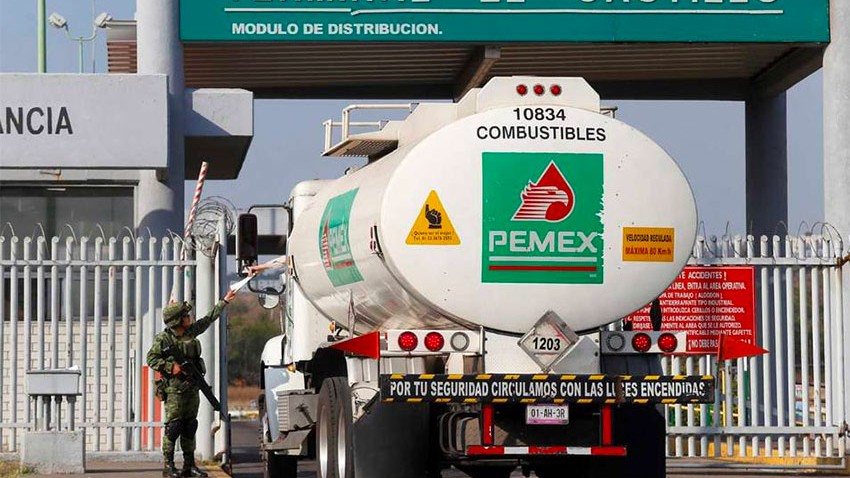
Mexico has invested heavily in refining infrastructure to reduce dependence on imported fuel, yet the state oil company Pemex continues to struggle with consistent operational performance across its facilities. While installed refining capacity has expanded to approximately 1.75 million barrels per day (excluding the Deer Park refinery in Texas), actual utilization rates remain problematic. During the second quarter of 2026, Mexican refineries operated at only 58% of installed capacity, processing roughly 1 million b/d while fuel imports climbed significantly.
The challenges became apparent after an initial period of improvement. From December 2025 through March 2026, refinery throughput had recovered to approximately 1.2 million b/d, with clean-product imports declining to around 520,000 b/d in the first five months of 2026 from roughly 750,000 b/d in 2024. However, this progress proved unsustainable. Beginning in April 2026, crude processing declined, falling back to approximately 1.01 million b/d by June, while product imports reversed course, rising to 700,000 b/d by June.
Technical failures represent the primary obstacle to improved refining performance across the Mexican system. Dos Bocas, the newest refinery with a design capacity of 340,000 b/d and a reported construction cost exceeding $20 billion, achieved its nameplate capacity on individual days in 2026 but averaged only 144,000 b/d during the second quarter—representing approximately 42% utilization. The facility has experienced repeated disruptions involving electrical failures, equipment problems, fires, and process-unit shutdowns since early 2025. Other refineries including Salina Cruz, Tula, Minatitlán, and Salamanca have also faced operational interruptions.
The operational inconsistencies undermine the economic rationale for Mexico’s refining strategy. When crack spreads—the profit margins for refined products—remain strong, keeping crude domestic for processing rather than exporting can be more profitable. However, Pemex’s inability to maintain high utilization rates means the company sacrifices crude-export revenue without fully capturing downstream refining margins. Simultaneously, the financial burden intensifies, as Pemex carried $77.5 billion in financial debt at the end of June 2026, with federal government capital contributions required to support operations.
While some improvements are evident—Tula’s utilization rose to approximately 79% in the first half of 2026, and the combined production of gasoline, diesel, and jet fuel increased 9% year-over-year despite crude processing rising only 3%—these gains have not proven durable across the broader system. Mexico’s refining strategy ultimately depends on demonstrating that capacity investments translate into sustained, reliable operations rather than intermittent peaks followed by operational deterioration.
Article Attribution | Read More at Article Source
Article summary produced by Claude AI