

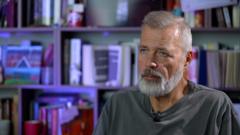
Dmitry Muratov, former chief editor and co-founder of Novaya Gazeta, one of Russia’s flagship independent news outlets, discussed the state of press freedom and the Ukraine conflict in an exclusive interview. The newspaper, which gained recognition for investigating human rights abuses and corruption, ceased operations after the Kremlin nationalized its printing presses and revoked its registration. While Novaya Gazeta maintains a limited online presence accessible only through VPNs or from outside Russia, the publication exemplifies the broader crackdown on free speech that has intensified since the full-scale invasion of Ukraine in 2022.
Muratov outlined the scope of repression against political opponents and critics, noting that hundreds of opinion leaders have been branded as foreign agents, extremists, or terrorists. He estimated that at least 1,500 individuals have been imprisoned for speaking out against state policy since the invasion began—substantially more than estimates from the Soviet era. Muratov highlighted cases of imprisoned journalists and activists, including Pavel Kushnir, a pianist who died during a hunger strike in pre-trial detention after posting anti-war videos.
Regarding the conflict itself, Muratov rejected President Putin’s assertions of inevitable Russian victory. He characterized the nearly five-year war as fundamentally destructive rather than victorious, noting that the loss of over a million lives across both nations cannot constitute success. Muratov expressed concern about frequent references to nuclear weapons use in Russian state media and official forums, stating he had documented more than 500 mentions of nuclear weapons necessity since the beginning of the year.
When asked whether the Nobel Peace Prize provides protection for his speech, Muratov declined to answer directly, suggesting the question be posed to authorities instead. Despite the restrictions and dangers facing critics in Russia, he noted that many citizens quietly express support for independent journalism and opposition to current policies, offering a modest counterpoint to the state’s control of public discourse.
Article Attribution | Read More at Article Source
Article summary produced by Claude AI