

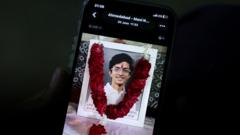
India experienced a crisis in early this year when a leak of examination papers for the National Eligibility cum Entrance Test forced the government to cancel the test and reschedule it for nearly two million candidates. The incident prompted a wave of youth suicides, with at least 21 students taking their own lives in the aftermath of the scandal.
One of those students was 17-year-old Kahaan Patel from Ahmedabad, the son of a lawyer who had reorganized his family’s life around his ambition to become a doctor. Kahaan had performed well in the initial test on 3 May, calling his father to express confidence in his performance. However, when news of the paper leak emerged, Kahaan became increasingly troubled by what he saw as systemic failure and government negligence. Three days before the rescheduled examination, he died by suicide on 18 June.
Another victim was Pradeep Kumar, a 23-year-old from rural Rajasthan whose family had made extraordinary sacrifices to support his medical ambitions. His father, a small farmer, had sold land and borrowed over one million rupees to fund his son’s coaching and education. Like Kahaan, Pradeep appeared confident after the initial exam, telling his father his selection was guaranteed. After learning of the required retest, he took his own life on 15 May.
The deaths galvanized a youth movement that took to the streets of Delhi in early July, with thousands of students demanding accountability for repeated examination failures. The Cockroach Janta Party led satirical protests that drew international attention to the crisis. These sustained demonstrations ultimately resulted in education minister Dharmendra Pradhan’s resignation on 25 July, and the government pledged compensation for affected families and promises of systemic reform.
For the bereaved families, the movement represented both loss and a form of vindication. Kahaan’s father traveled to Delhi to participate in the protests, seeking not compensation but accountability. He found meaning in watching other young people continue to protest despite police action, viewing them as giving voice to his son’s silent suffering. The tragedy underscored broader questions about examination systems, institutional accountability, and youth mental health in a high-pressure academic environment.
Article Attribution | Read More at Article Source
Article summary produced by Claude AI