

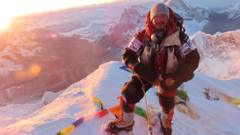
Six Nepali mountain guides perished in an avalanche on Broad Peak, Pakistan’s 12th highest mountain, last week, dealing a significant blow to Nepal’s mountaineering sector. The deceased included Nirmal Purja, a 43-year-old British-Nepali climber celebrated for summiting all 14 peaks above 8,000 meters in just over six months, an achievement documented in a Netflix film. Purja led the 10-member international expedition when the disaster struck.
The other five guides killed were experienced mountaineers with substantial accomplishments. Kili Pemba Sherpa, 46, had recently completed the mountaineering Grand Slam by finishing his ascent of the 14 highest peaks in early July and participated in the first winter ascent of K2 in January 2021. Pur Bahadur Gurung, 37, had summited 12 of the 14 highest peaks and held certification from the International Federation of Mountain Guides Association, a distinction achieved by only approximately 100 Nepali guides. Gyaljen Sherpa was known for scaling Kanchenjunga, the world’s third-highest mountain, three times in one season. Nima Sherpa, 36, completed four eight-thousanders during the current year. Nawang Thindu Sherpa, in his 20s, represented Nepal’s emerging generation of mountain guides.
Purja’s accomplishments helped elevate Nepal’s mountaineering guides from being perceived as mere support staff to recognized elite athletes. His record-breaking feat and media prominence brought increased international attention to climbing in Pakistan, traditionally overshadowed by Nepal’s more developed mountaineering infrastructure. This shift has made Pakistan a major destination for Nepali guides pursuing their own climbing ambitions and leading international expeditions.
Mountaineering experts note that the Karakoram region’s remote location presents substantially greater challenges than the Himalayas. Unlike Nepal’s established lodge networks and integrated rescue helicopter systems, Pakistan’s mountains lack accessible landing zones and support infrastructure, requiring guides to manage rope fixing, ice cutting, and camp establishment independently. These conditions restrict expeditions to two or three mountains per trip, creating tighter and potentially riskier schedules.
Industry observers express skepticism about whether the disaster will meaningfully alter high-altitude tourism practices. Historical precedent suggests minimal changes follow mountaineering accidents, as the inherent dangers and appeal of risk remain central to the sport’s attraction. The existing generation of guides continues pursuing the global recognition and world records established by their predecessors, a motivation experts believe will persist regardless of tragedies.
Article Attribution | Read More at Article Source
Article summary produced by Claude AI