

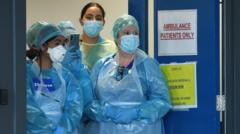
A Covid inquiry led by Baroness Hallett has concluded that the United Kingdom’s response to personal protective equipment shortages during the pandemic involved substantial waste and left healthcare workers and patients at risk. The chair identified £9.9 billion in wasteful spending—approximately two-thirds of the £14.9 billion total government expenditure on PPE—stemming from ineffective procurement practices and inadequate emergency preparation.
The inquiry found that the UK’s stockpile of masks, gowns, and gloves began the pandemic in a precarious condition. The existing supply, designed to sustain operations for at least 15 weeks before replenishment, became depleted by the end of March 2020 as hospital demand surged. In England, only one-third of pandemic stockpile masks were found to be usable, while Scotland reported having no supplies of high-grade respiratory masks required for hospital use. Primary care settings including care homes, GP surgeries, and pharmacies were expected to independently procure their own protective equipment, which the inquiry characterized as a critical planning failure.
The government was forced to write off £9.9 billion in PPE that remained unused or had expired, along with £157 million in unused healthcare equipment. Additional costs included £143 million attributed to ventilator development designs that never reached production. Across the devolved nations, further write-offs occurred: Scotland recorded £8 million, Wales £18 million, and Northern Ireland £43 million in at-risk supplies.
The inquiry scrutinized the “VIP lane” system, a prioritized contracting pathway introduced in April 2020 for suppliers with political connections. Baroness Hallett called this approach a misguided policy that introduced unfairness into emergency procurement and should not be replicated. However, she stated there was no evidence of ministerial or official cronyism or corruption in final contract awards. The inquiry noted that better planning and demand calibration would have yielded fairer, faster, and less expensive procurement outcomes.
The inquiry recommended a comprehensive overhaul of emergency PPE procurement systems, development of a domestic industry strategy treating key healthcare equipment as a strategic national asset, and improvements to stockpile conditions in its Merseyside storage facility.
Article Attribution | Read More at Article Source
Article summary produced by Claude AI