

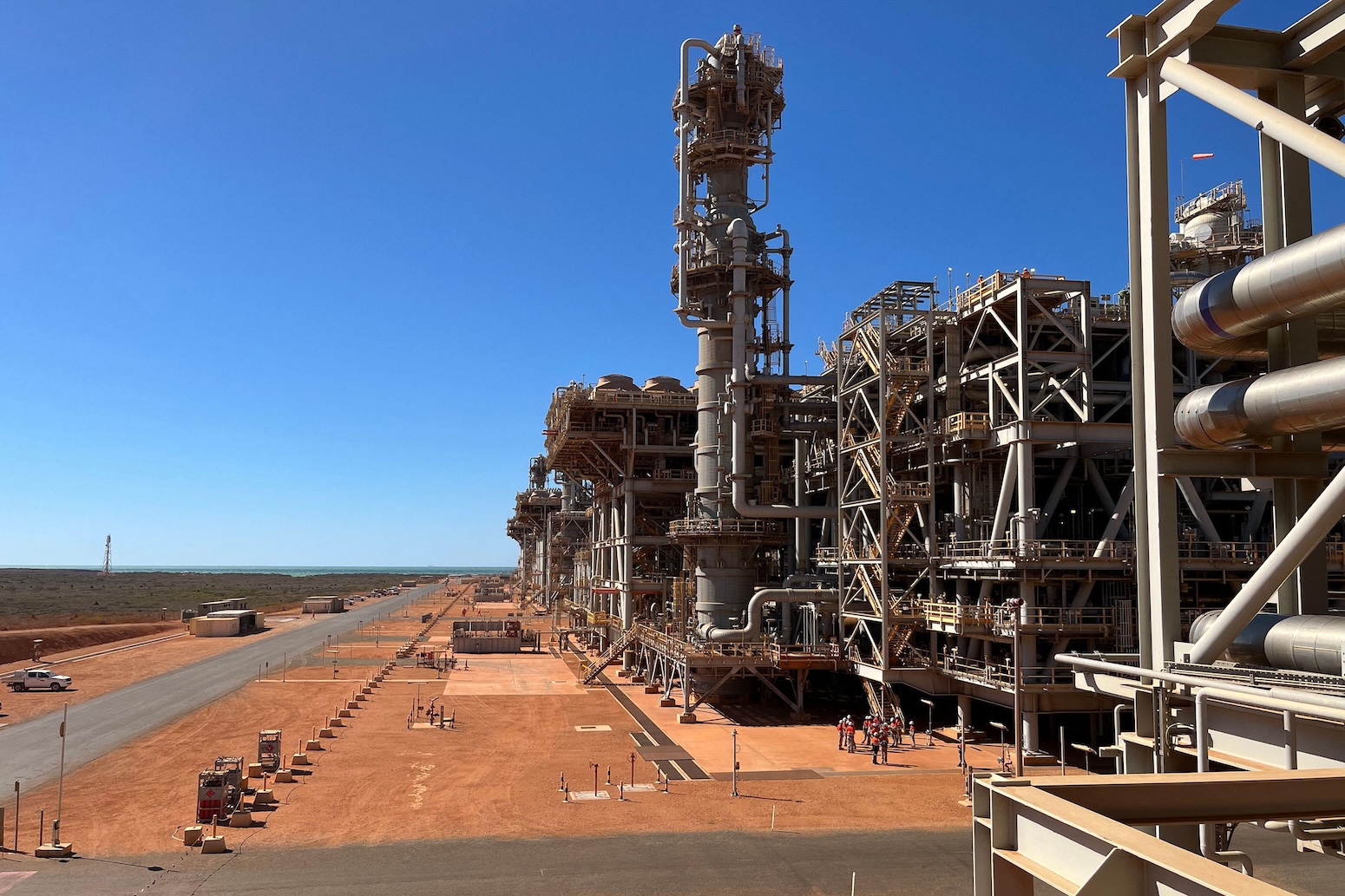
Carbon capture and storage (CCS) involves capturing carbon dioxide from industrial sources such as power plants and cement factories, compressing it, and injecting it into underground geological formations for permanent storage. The technology is considered critical by the Intergovernmental Panel on Climate Change and other influential organizations for achieving net-zero emissions, particularly in sectors difficult to decarbonize such as heavy industry.
As of February 2026, approximately 75 operational CCS projects existed worldwide, capturing 62.5 million tonnes of CO2 annually—equivalent to Ecuador’s yearly emissions but a tiny fraction of global fossil-fuel emissions. Most existing capacity is located in the United States and Canada, with projects primarily focused on fossil-fuel extraction rather than permanent storage. Many climate scenarios projecting net-zero pathways rely on dramatically expanding CCS capacity over coming decades, with the International Energy Agency estimating that capturing 1.7 gigatonnes of CO2 annually by 2035 would be necessary—nearly 30 times current levels.
Despite its prominence in net-zero models, CCS faces substantial criticism. Critics contend the technology remains expensive compared to rapidly declining renewable energy costs, question whether it can scale adequately, and point out that most existing projects capture significantly less than the recommended 90-95% of emissions. An analysis by the Institute for Energy Economics and Financial Analysis found most operational projects operate far below target capture rates, continuing to emit substantial quantities of CO2. Additionally, concerns exist regarding upstream emissions from natural gas extraction and transportation, as well as the technology’s historical connection to the fossil-fuel industry.
The United Kingdom has committed up to £21.7 billion over 25 years to support five initial CCS projects, including clusters in northeast England and northwest England designed for deployment in the late-2020s. However, government expectations for CCS have been scaled back in recent years, with the Climate Change Committee reducing projected capacity recommendations and emphasizing greater opportunities for decarbonizing other sectors. The UK government’s cluster-based approach has drawn criticism for potentially failing to prioritize industries most in need of CCS, such as cement production.
Article Attribution | Read More at Article Source
Article summary produced by Claude AI