

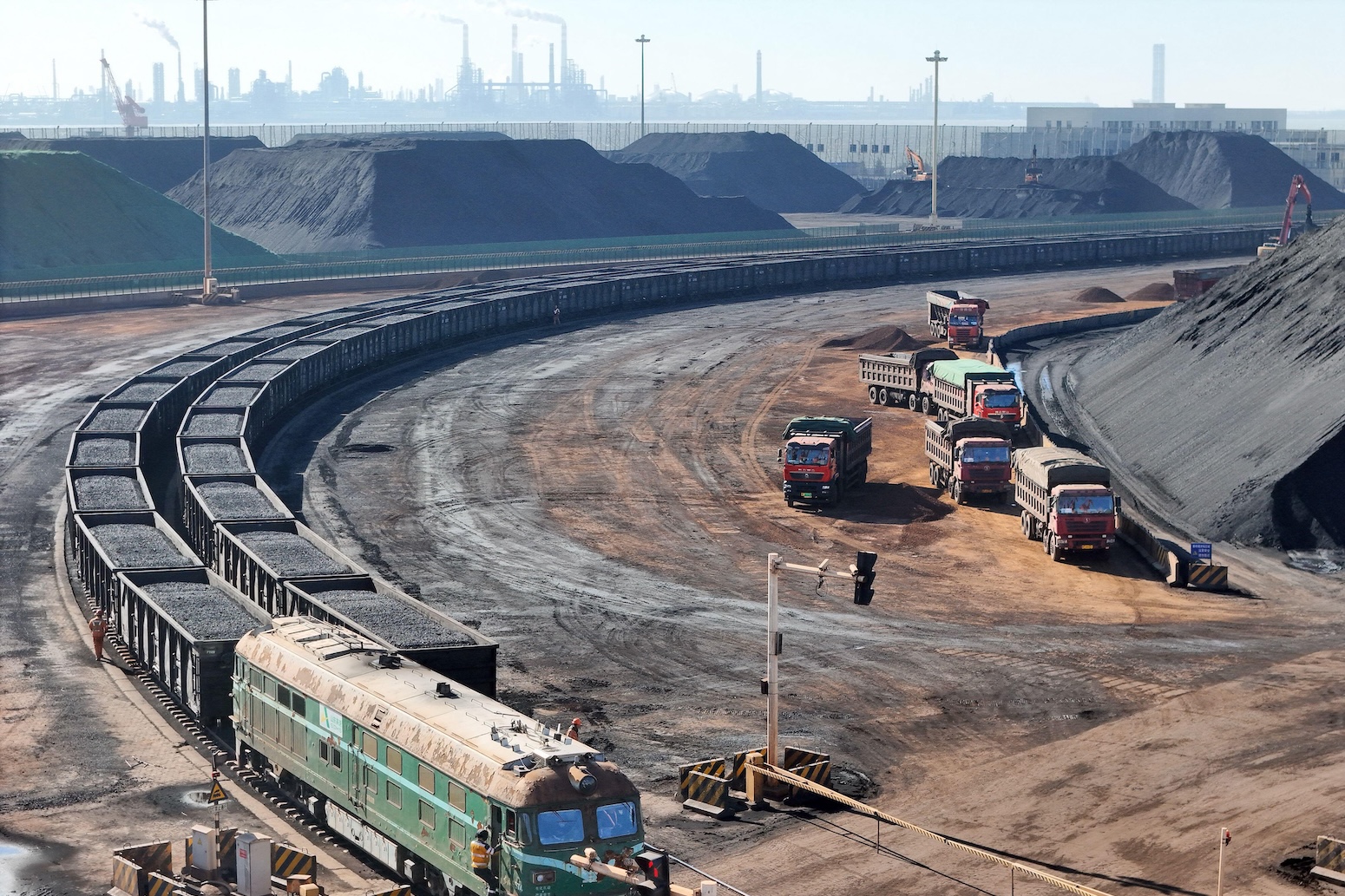
China’s National Development and Reform Commission and National Energy Administration released the 15th five-year plan for coal development on August 10, establishing policy guidance for the sector through 2030. The plan arrives as China works toward its pledge to peak carbon dioxide emissions before 2030, with government-affiliated organizations having previously suggested coal consumption could peak around 2027. However, the new plan does not establish an official target year for when coal use will reach its peak, instead committing broadly to achieve this milestone sometime during the five-year period.
The coal plan frames the fuel as a foundational component of China’s energy system, describing it as vital to national economic security and energy supply stability. Rather than positioning coal as a sector to be phased down or eliminated, the document emphasizes the importance of maintaining coal’s role as what analysts describe as a “cheap and secure” energy source. This approach reflects broader geopolitical factors, particularly concerns about energy market volatility stemming from Middle East conflicts, which have reinforced the perceived need for domestic energy independence. The plan also addresses transitional measures, including efforts to reduce methane emissions from coal operations and promote cleaner use of the fuel, while encouraging diversification into clean energy and chemical industries as consumption eventually declines.
The plan’s targets for 2030 focus on strengthening coal’s capacity to serve as a reliable energy supply backbone rather than reducing its absolute role in the energy system. While coal has historically supplied roughly 80 percent of China’s emissions and traditionally represented the country’s primary energy source, its share has been gradually declining. In the first half of 2026, coal accounted for less than 50 percent of power generation and 51.4 percent of total energy consumption, with non-fossil sources exceeding half the power mix in 2025.
Analysts characterize the plan as emphasizing continuity in balancing energy security with low-carbon transition goals rather than accelerating coal phase-out measures. The absence of a specific government-endorsed peak year provides flexibility regarding the transition timeline, though experts suggest that actual peaking will ultimately depend on market forces, technological advancement, electricity demand patterns, and industrial activity rather than regulatory mandates. Beijing’s role is expected to focus on preventing peak timelines from extending beyond 2030 rather than directing the exact year of peak consumption.
Article Attribution | Read More at Article Source
Article summary produced by Claude AI