

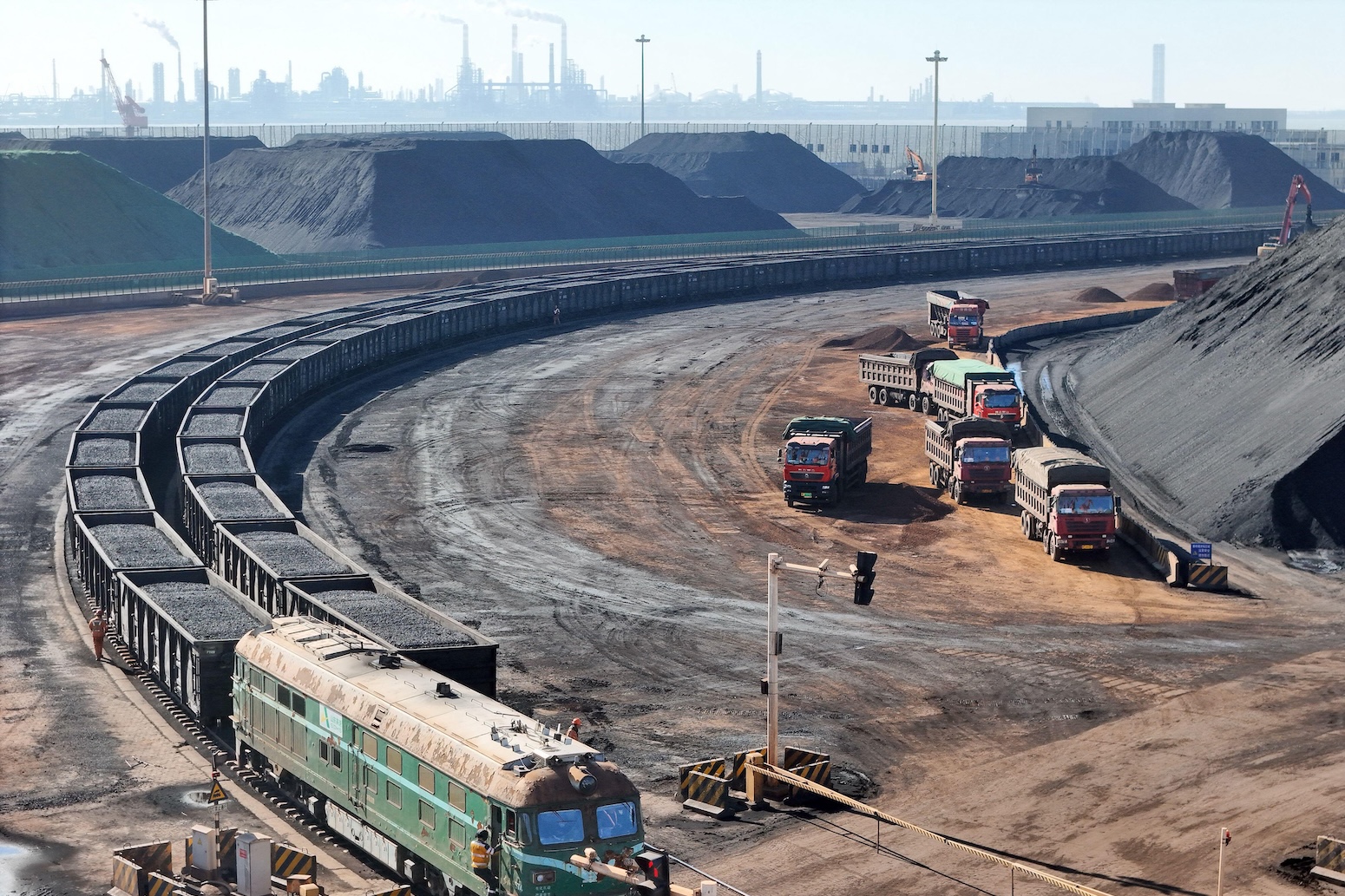
China’s National Development and Reform Commission and National Energy Administration released the 15th five-year plan for coal development on August 10, establishing policy direction through 2030. The plan represents a critical period as China works toward its pledge to peak carbon dioxide emissions before 2030, though it notably does not establish a government-endorsed target year for coal consumption to peak, instead setting a broader goal within the five-year period.
The document characterizes coal as foundational to China’s economy and national energy security while acknowledging the need for industry transition. Analysts attribute the plan’s emphasis on coal’s role to broader geopolitical factors, particularly concerns about energy security stemming from regional conflicts. The plan signals that China’s energy transition will be marked by creating a more concentrated, efficient and resilient coal system rather than pursuing rapid phase-down. It requires new production capacity to be centrally approved and establishes minimum production requirements for new mines in northern provinces.
Coal currently supplies roughly half of China’s power generation and accounts for over half of total energy consumption, though non-fossil energy exceeded 50 percent of the power mix in 2025. The plan includes provisions for peaking coal use while maintaining reserve production capacity of at least 100 million metric tonnes annually to support renewable energy variability. Northern provinces including Shanxi, Inner Mongolia, Shaanxi and Xinjiang are designated to provide over 80 percent of China’s coal by 2030.
The plan addresses the coal industry’s low-carbon transition and the clean use of coal, with specific focus on coalbed methane production and utilization. China targets 26 billion cubic metres of coalbed methane production and 6.5 billion cubic metres of mine-gas utilization by 2030. Additionally, the plan encourages coal companies to diversify into clean energy and chemical production, recognizing that coal-to-chemical conversion represents a significant sector for growth. These provisions reflect efforts to maintain China’s energy security while managing workforce and regional economic impacts as coal consumption eventually declines.
Article Attribution | Read More at Article Source
Article summary produced by Claude AI