

China has unveiled its renewable energy strategy for the 2026-2030 period through its 15th five-year plan, establishing ambitious targets for clean energy expansion while shifting focus toward grid stability and reliability. The plan calls for installing 3,500 gigawatts of total renewable capacity by 2030, with wind and solar comprising 2,800 gigawatts of that total. This represents a significant increase from China’s previous 2030 target of 1,200 gigawatts for wind and solar, which the country achieved six years ahead of schedule. As of June 2026, China has installed nearly 2,000 gigawatts of wind and solar capacity alongside 454 gigawatts of hydropower.
A key shift in the plan emphasizes making renewable energy sources more “dependable” and “grid-friendly.” The strategy introduces targets for “firm capacity” from wind and solar, requiring wind to provide at least 11 percent of its installed capacity as reliable power during critical supply periods, with solar targeting 6 percent. Additionally, renewables are expected to supply more than 20 percent of total demand during peak summer and winter periods. This focus on reliability aims to position renewables as a genuine substitute for fossil fuels in ensuring energy security and grid stability.
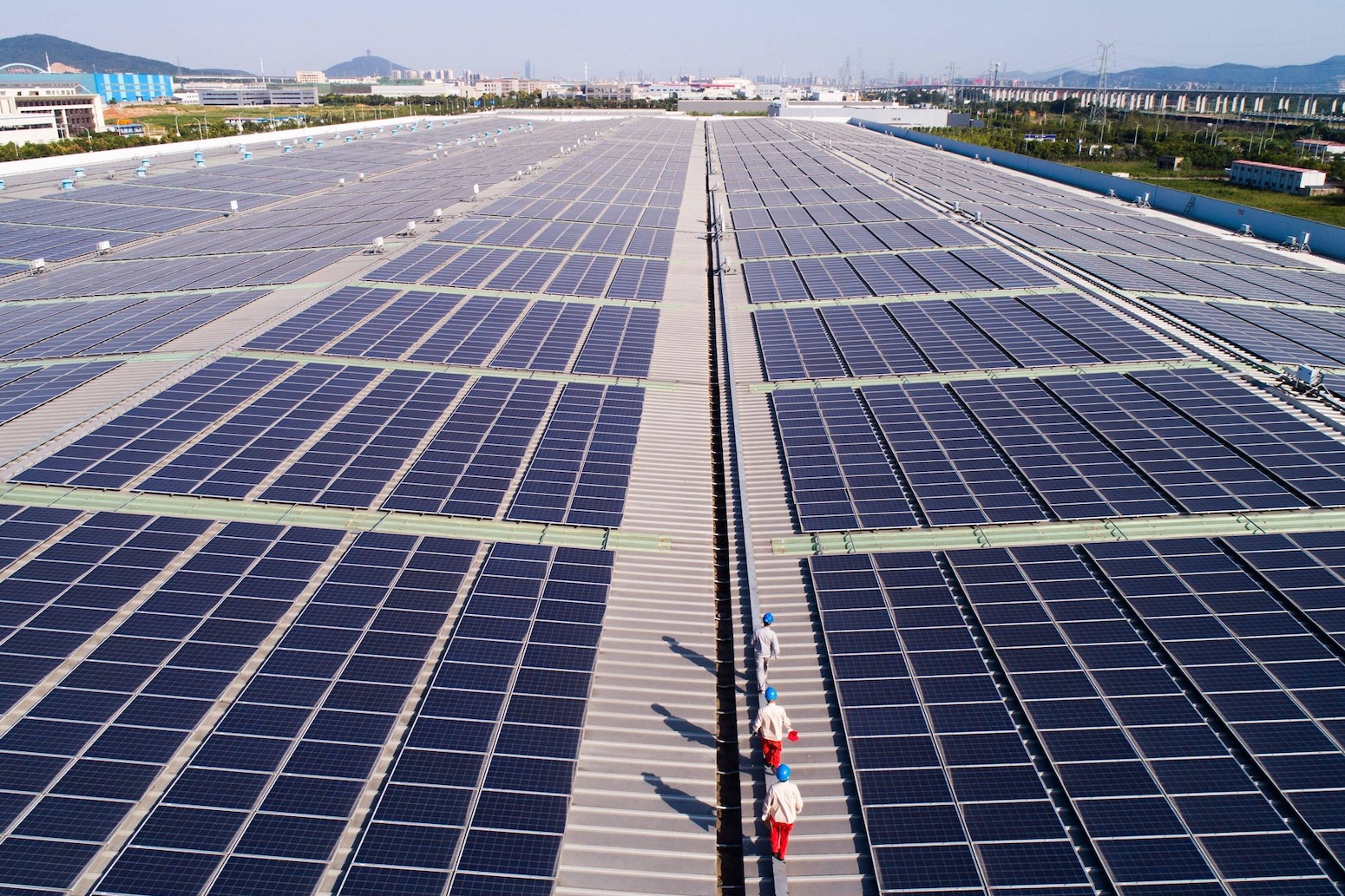
The plan also prioritizes the development of distributed renewable energy and non-power uses of clean energy. Over 300 gigawatts of distributed new energy, such as rooftop solar and small-scale wind installations, are to be added between 2026 and 2030. Non-power applications, including green hydrogen, ammonia, methanol, and industrial heat, are targeted to increase nearly threefold from 60 million tonnes of coal equivalent in 2025 to 150 million tonnes by 2030. Specific industrial sectors including steel, cement, chemicals, and textiles are identified for renewable energy integration.
Technological innovation receives emphasis throughout the plan, with commitments to develop advanced wind turbine blades, ultra-tall towers, floating offshore platforms, high-efficiency solar cells including perovskite technology, and space-based solar systems. The plan also underscores China’s intention to strengthen its position in global clean-energy markets through international cooperation, increased investment in Belt and Road Initiative projects, and expanded exports of Chinese clean-energy technologies. The strategy represents China’s transition from a major energy nation to an energy powerhouse with systemic advantages in clean-energy development.
Article Attribution | Read More at Article Source
Article summary produced by Claude AI