

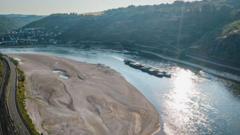
Major European waterways have reached record or near-record low levels amid prolonged drought conditions and extended heatwaves across the continent. The Rhine, one of Europe’s busiest shipping routes, fell to levels in Cologne and Lobith that have not been recorded since measurements began. The Danube, which crosses through 10 countries, and Italy’s Po River have similarly experienced critically low water levels. According to the EU’s Drought Observatories, drought conditions remained stable and critical across most of Europe in mid-July, with some regions experiencing worsening conditions.
The water shortages are creating significant economic and operational challenges. Germany’s Low Water Information System reported that 44% of Rhine measuring stations and 78% of Danube stations recorded extremely low water levels by the end of July. The Kaub gauging station, a critical indicator of navigability on the Rhine, reached the 2018 record low of 25 centimeters, creating shipping constraints. According to authorities, cargo vessels will need to reduce loads and be distributed among more ships, potentially increasing transport costs and creating supply bottlenecks. A commodity trader told Reuters that at some point, loads become too small to justify shipping or vessel operators fear damaging their ships.
The drought is also affecting energy production across the region. Hungary’s sole nuclear power plant is operating at reduced capacity due to insufficient water for cooling, with officials monitoring whether it may need to shut down entirely. In Serbia and Romania, low Danube water levels have disrupted power supplies, leading Serbia to cut output at coal-fired plants. Romania conducted a controlled explosion on a riverbank rock to increase water flow to a nuclear facility. Two automobile manufacturers operating in Romania, Dacia and Ford, have agreed to halt production for more than two weeks to conserve electricity.
The drought is creating additional pressures on freshwater resources and agriculture. Italy raised its drought alert level to high across the entire Po Valley, with authorities warning of potential disruption to drinking water supplies. Lower river flows at the Po’s mouth have allowed saltwater intrusion from the sea, harming ecosystems and creating difficulties for farmers relying on the river for irrigation.
Scientists at the World Weather Attribution group noted that while there has been no clear long-term trend toward reduced rainfall across much of Europe, human-caused climate change is increasing evaporation through higher temperatures, making drought conditions more probable. The combination of heat and dry conditions has also raised water demand for household, agricultural, and industrial purposes, straining available supplies further.
Article Attribution | Read More at Article Source
Article summary produced by Claude AI