

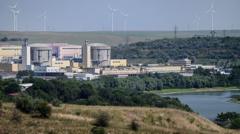
Romania disconnected the second reactor at its Cernavodă nuclear power station on Thursday, following the shutdown of the first reactor in July. The facility, which generates approximately one-fifth of Romania’s electricity supply, relies on the Danube River for cooling purposes. Plant officials stated they do not anticipate restarting operations within the next 10 days.
The shutdown stems from record-low water levels in the Danube, which have reached their lowest point in 30 years across several European nations. Earlier this week, Romanian authorities attempted to maintain adequate water flow by depositing barges loaded with rocks into the river. Hungary’s Paks nuclear facility, which also depends on the Danube, has so far avoided a similar shutdown, though Hungarian officials previously warned of potential closure risks.
The loss of nuclear generation capacity will be compensated through alternative sources. Solar and wind power are expected to cover demand during daylight hours, while evening electricity needs will rely on coal and gas generation supplemented by power imports. Romania’s substantial hydroelectric capacity has also been significantly constrained by the same low water conditions affecting the nuclear plant.
The widespread drought is part of a broader heat crisis affecting much of Europe, which is warming at twice the global average rate according to Copernicus climate service data. Major waterways including the Rhine face similar low-level challenges, disrupting transportation and economic activity. Agricultural sectors across the continent have sustained substantial damage, with Italian estimates of climate-related losses exceeding €3 billion and French projections ranging from €10 billion to €15 billion. Multiple countries including Greece, France, Spain, and the United Kingdom are experiencing severe wildfires and extreme temperatures exceeding 37 degrees Celsius in some locations.
Article Attribution | Read More at Article Source
Article summary produced by Claude AI