

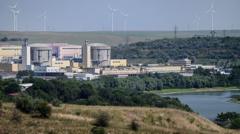
Romania has closed the Cernavodă nuclear facility, which houses two 706-megawatt reactors, in response to record low water levels in the Danube River driven by an extended heat wave. The plant, which typically supplies approximately 20% of Romania’s electricity, is not anticipated to resume operations within the next 10 days. The second reactor was disconnected from the grid just before midday on Thursday, following the earlier shutdown of the first reactor in July. Prior to this incident, the facility had only experienced one previous shutdown in 2003.
The Danube’s water levels have fallen to their lowest point in 30 years across several countries in the region. Earlier in the week, Romanian authorities attempted to increase water flow to the plant by sinking barges filled with rocks into the river in an effort to maintain adequate cooling water access. Hungary’s Paks nuclear station, which also relies on the Danube for cooling, has managed to avoid shutdown thus far, though officials have warned of potential forced closure. The power deficit created by Romania’s nuclear closure is being addressed through increased solar and wind generation during daylight hours, supplemented by coal and gas power plants and electricity imports during evening periods.
The crisis reflects broader challenges facing Europe as the continent experiences accelerated warming at approximately twice the global average rate. Low water levels are affecting multiple critical waterways, including the Rhine, which is experiencing severe shipping disruptions. The extreme heat is generating significant economic consequences across the region, with estimates of climate-related agricultural damage in Italy potentially exceeding €3 billion and France anticipating between €10 billion to €15 billion in direct and indirect costs. Analysts suggest these conditions could substantially reduce projected economic growth for the European Union. Simultaneously, Greece, France, Spain, and the United Kingdom are battling wildfires and dangerous heat conditions, with multiple countries implementing emergency alerts and evacuation procedures.
Article Attribution | Read More at Article Source
Article summary produced by Claude AI