

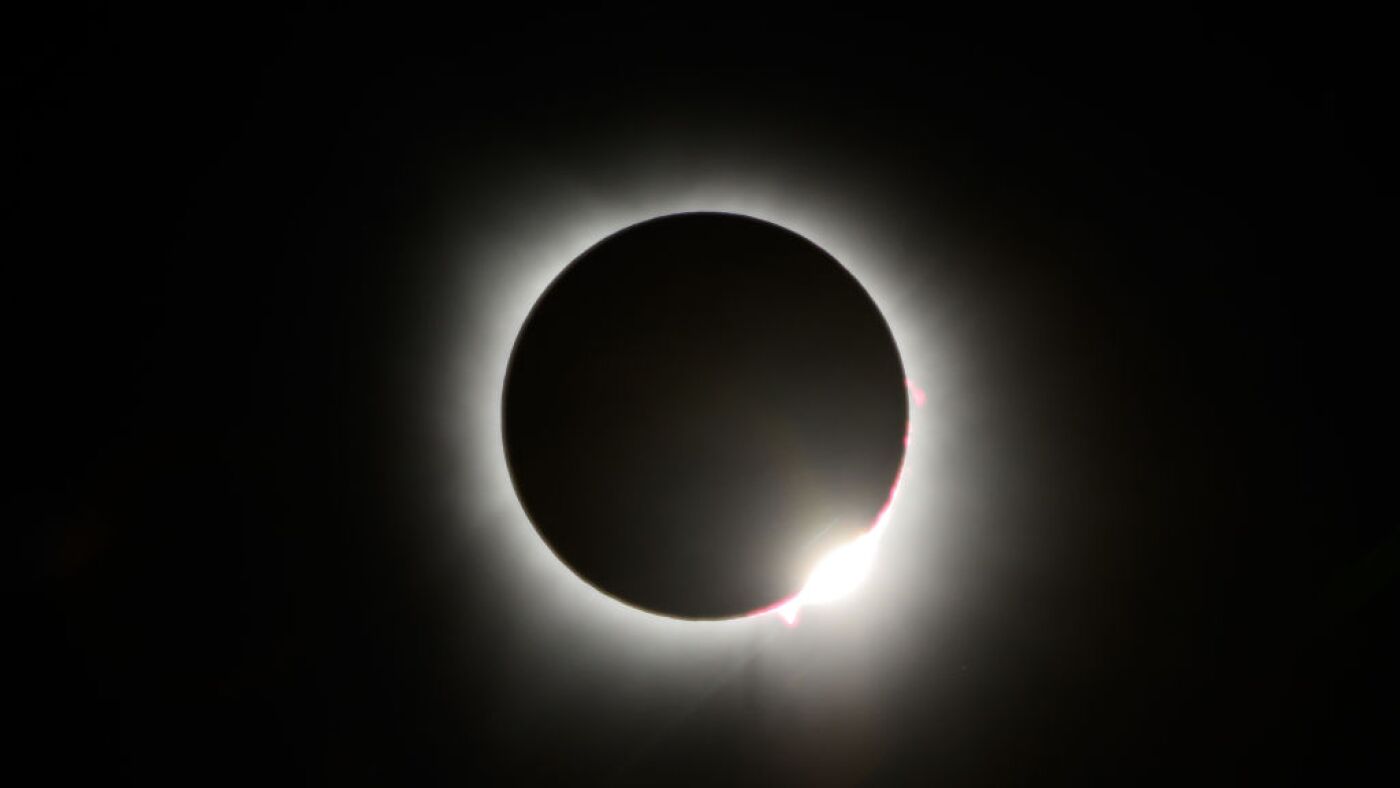
A solar eclipse is scheduled to occur on Wednesday, with different viewing experiences across various regions. Residents of Iceland, Greenland, northern Russia, Spain, and Portugal will experience a total solar eclipse, during which the Moon completely blocks the Sun’s disk. Meanwhile, northern portions of the United States stretching from Alaska to North Carolina will observe a partial eclipse, where the Moon obscures only a portion of the Sun, creating a crescent appearance.
The timing of the eclipse varies by location. In Washington, D.C., the partial eclipse is expected to commence at approximately 1:17 p.m. ET with roughly 4 percent of the Sun’s surface covered. In Reykjavík, Iceland, the total eclipse will begin at 5:48 p.m. local time, while in León, Spain, totality will commence at 8:28 p.m. and persist for two minutes. According to the European Space Agency, this marks the first solar eclipse visible from mainland Spain since 1905.
Safety precautions are essential for eclipse observation. Specialized equipment such as eclipse glasses or handheld viewers equipped with appropriate filters are necessary to protect eyesight. Standard sunglasses provide insufficient protection and should not be used as alternatives. The American Academy of Ophthalmology warns that direct sun gazing, even briefly, can cause serious ocular damage including burns and irreversible vision loss.
Beyond the visual spectacle, the eclipse presents a valuable scientific opportunity. NASA will deploy teams equipped with scientific balloons and high-altitude aircraft to investigate the atmospheric effects of the temporary darkness. Kelly Korreck, NASA’s eclipse program manager, noted that total solar eclipses provide a unique vantage point for studying the Sun’s corona from Earth. Future eclipse events include a partial eclipse visible across parts of the U.S. on Aug. 2, 2027, and a total eclipse across portions of the contiguous U.S. on Aug. 23, 2044.
Article Attribution | Read More at Article Source
Article summary produced by Claude AI