

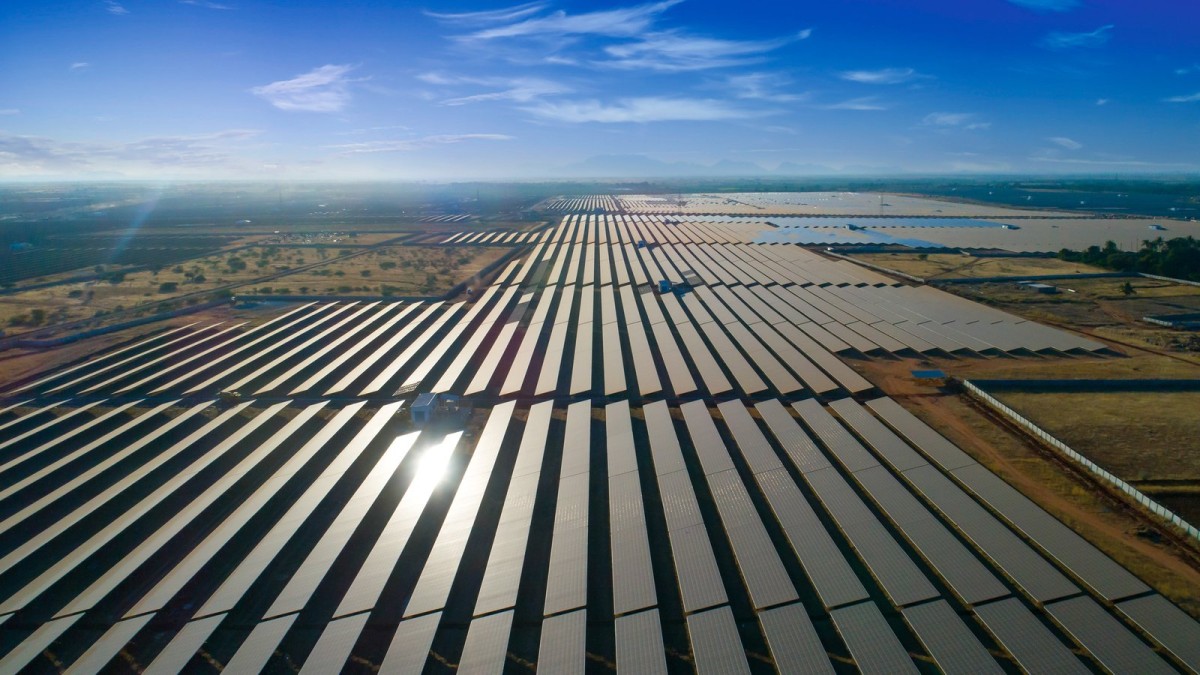
Solar power has reached a critical economic milestone where its initial capital costs have fallen below those of fossil fuel plants producing the same amount of electricity, according to analysis by Ember. This represents a significant departure from the previous two decades, when solar required up to five times more upfront investment than coal or gas infrastructure despite offering lower lifetime costs.
The comparison accounts for the different output characteristics of various power sources, measuring capital requirements needed to deliver equivalent annual electricity quantities rather than simply comparing installed capacity. Solar’s total installed costs have declined 87% since 2010, driven by mass manufacturing processes that have standardized module production, improved efficiency rates, and expanded supply chains across major markets. While solar’s capital-intensive upfront structure has not changed fundamentally, the absolute amount of investment required has dropped dramatically. This shift carries particular significance for countries dependent on imported fossil fuels, where gas plants create ongoing fuel purchase obligations despite lower initial costs, whereas solar effectively prepays much of its energy supply for 25 to 30 years.
The impact of upfront-cost parity may be most pronounced in fast-growing emerging economies facing simultaneous pressures of rising electricity demand, high borrowing costs, and fossil fuel import dependence. Previously, these countries faced a paradox where solar’s lower lifetime costs and energy independence benefits were offset by their higher cost of capital, making cheaper fossil plants more attractive at the financing stage. Solar’s modular nature allows capacity additions in smaller increments and shorter construction periods, reducing the concentration of capital at risk. While financing challenges remain substantial in many developing markets, solar no longer begins with an inherent capital disadvantage.
Battery storage costs have declined 93% since 2010, enabling solar-plus-battery systems to achieve competitiveness with new fossil fuel capacity. IRENA estimates firm solar-plus-battery electricity costs at roughly $54–82 per megawatt-hour in high-irradiance regions, comparable to new coal plants in China and below new global gas capacity costs exceeding $100 per megawatt-hour. Further cost reductions of approximately 30% are anticipated by 2030. While integrating renewable energy sources into electricity systems requires diverse resources and flexibility measures that increase costs with higher renewable penetration, solar no longer faces prohibitive economics when storage and grid flexibility are included in assessments.
Article Attribution | Read More at Article Source
Article summary produced by Claude AI