

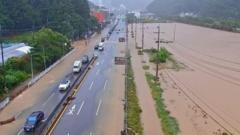
South Korea’s Gyeongsang province experienced severe weather conditions this week, with torrential rains triggering a landslide that resulted in one fatality and two injuries in the southeastern city of Geoje. The incident occurred when the first floor of an apartment building was buried by debris from the landslide on Monday morning. Rescue operations successfully extracted three individuals from the affected structure, though one was pronounced dead at the scene.
The rainfall intensity in Geoje reached unprecedented levels for the city’s recorded meteorological history. The area received 124.5mm of rain within a single hour, marking the highest hourly precipitation recorded since the South Korean meteorological agency began tracking data for the city in 1972. Over the preceding night into Monday, the cumulative rainfall exceeded 400mm, contributing to widespread flooding across the municipality.
The extreme weather prompted significant disruptions to daily life and public services in Geoje. Local authorities suspended bus operations and household waste collection due to flooded and damaged roadways. Several tourist attractions were also closed as a precautionary measure. Social media documentation showed the severity of flooding, with images of submerged vehicles caught in powerful water currents moving through city streets. On Sunday, officials had issued public advisories urging residents to refrain from driving, avoid high-risk areas near waterways, and relocate to shelters if necessary.
The situation in South Korea reflects broader weather patterns affecting the region. Multiple storms have impacted large areas of East and South East Asia this month, with similar incidents of flooding and infrastructure damage reported in neighboring countries. Meteorological forecasters attributed the intensified typhoon season to climatic factors, noting that a strong El Niño phenomenon initiated in June has elevated global temperatures and enhanced typhoon strength. The extended period of hazardous weather conditions is expected to continue affecting the region.
Article Attribution | Read More at Article Source
Article summary produced by Claude AI