

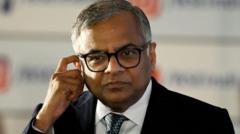
N Chandrasekaran, 63, announced he will step down as chairman of Tata Group in February after deciding not to pursue another term. The decision follows months of deliberation within the board of Tata Sons regarding a proposed five-year extension of his tenure. According to Chandrasekaran’s statement, the board was unable to achieve unanimous support for the extension when it was initially brought forward earlier in the year, and no resolution emerged even six months later.
The announcement triggered significant market reaction, with shares of listed Tata companies declining following the news. The development comes ahead of Tata Sons’ annual general meeting and reflects ongoing tensions within the company’s governance structure. Chandrasekaran emphasized that given Tata Group’s scale and the number of strategic projects at critical execution stages, both a clear leadership transition and advance clarity on the group’s direction are important for employees, investors, partners and other stakeholders.
Tata Group operates under a distinctive corporate structure in which Tata Trusts, a charitable organization, holds a 66% stake in Tata Sons, the group’s parent company. This arrangement has provided tax and regulatory advantages while enabling charitable work, though observers have noted that balancing non-profit and commercial objectives has occasionally created governance complications. Reports have indicated that board disagreements have centered on matters including nominations, funding approvals and potential public listing of Tata Sons, though the group has not made public statements on the internal dynamics.
Chandrasekaran became chairman in 2017, succeeding Cyrus Mistry whose removal had sparked legal disputes. Prior to his appointment, Chandrasekaran served as CEO and managing director of Tata Consultancy Services and had been with the group since 1987. Market analysts noted that leadership transitions at this level typically influence investor sentiment, though observers suggested the six-month timeline before his departure provides opportunity to identify a successor, potentially from within the organization’s ranks.
Article Attribution | Read More at Article Source
Article summary produced by Claude AI