

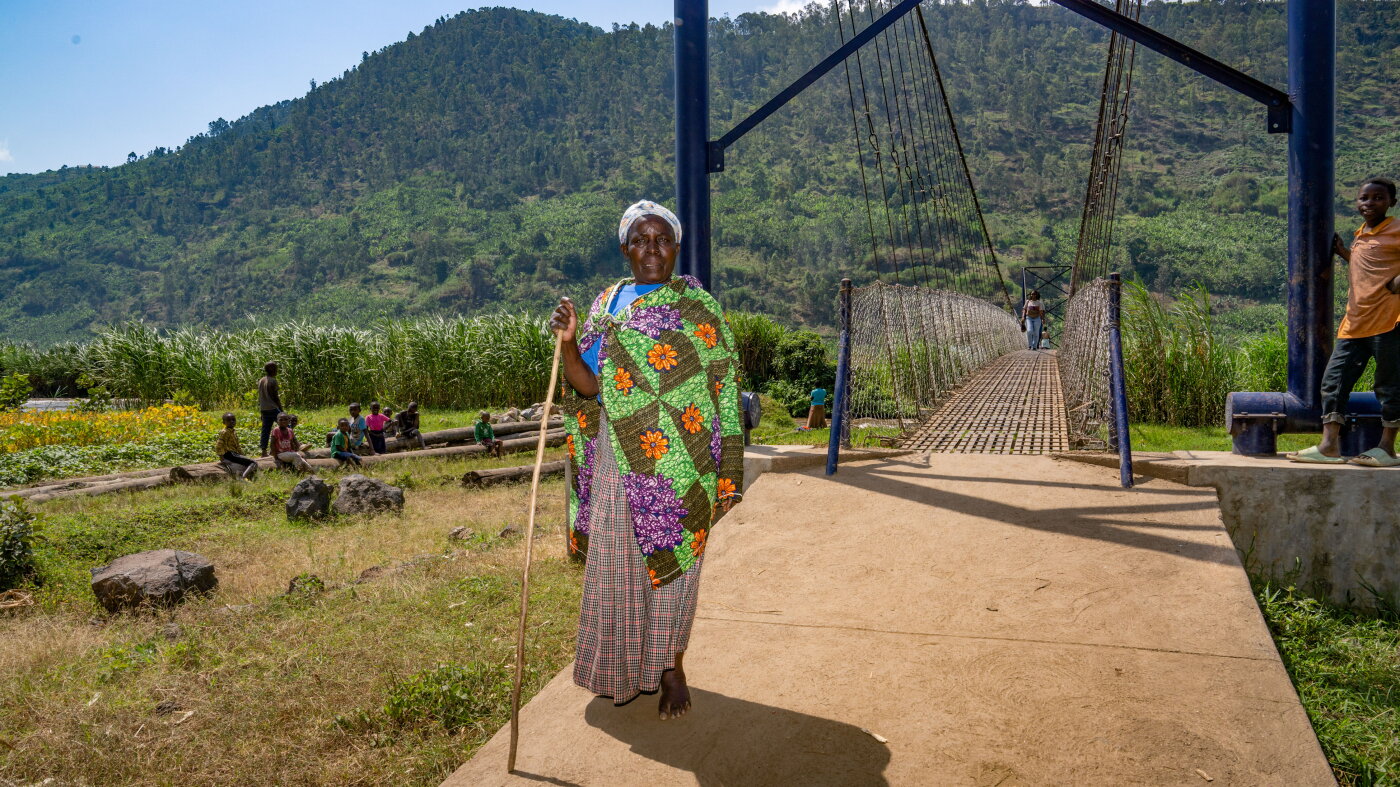
In rural Rwanda, a 230-foot pedestrian suspension bridge spanning the Mukungwa river has transformed daily life for residents of two valley settlements previously separated by challenging water crossing conditions. Before the bridge’s construction in 2025, community members faced dangerous alternatives: expensive boat hire, makeshift timber log bridges that became unstable during rainy seasons, or a three-hour trek to a narrower crossing point. These obstacles resulted in drowning deaths, school dropouts among fearful parents, and economic hardship for farmers unable to reliably transport goods.
The Cyangoga bridge represents one of 96 structures built across Rwanda since 2020 by Fika, a Kigali-based nonprofit organization whose name means “to arrive” in Swahili. Funding came from the Rwandan government and international donors including the U.S. Agency for International Development. The bridge connects communities with shared but geographically divided services, including a health clinic, school, and market available only on one side of the river.
Researchers from the University of Colorado Boulder conducted the first comprehensive study of the bridges’ impact, surveying tens of thousands of households across hundreds of villages. Results released in July documented substantial improvements following bridge construction, including increased household income and consumption, expanded agricultural cultivation, greater fertilizer use, and rising school enrollment rates. In the Mukungwa valley specifically, banana wine producers more than tripled their output, while the nearby health clinic experienced a 40 percent increase in patient visits.
Fika primarily constructs two bridge designs suited to Rwanda’s terrain. Suspension bridges with steel towers and buried anchors serve valley locations, while suspended cable bridges resembling traditional rope structures span steep gorges. The challenging mountainous and wet geography of Rwanda complicates infrastructure development, requiring construction methods that avoid heavy machinery. Each bridge costs approximately $100,000 on average, representing a cost-effective investment relative to Rwanda’s difficult terrain conditions.
Article Attribution | Read More at Article Source
Article summary produced by Claude AI