

Canada is experiencing intensifying wildfire seasons, with over 750 active fires burning across the country as of August. The situation has prompted a national discussion about whether sufficient firefighting resources exist to handle increasingly severe fire conditions, particularly in remote communities near Canada’s boreal forest that face the greatest exposure to danger.
Hubert Wigwas, a councillor from Gull Bay First Nation in northern Ontario, chose to remain in his community despite evacuation orders, installing roof sprinklers and monitoring elders who stayed behind. He faces a fine of approximately C$800 for defying the evacuation directive. Wigwas noted the absence of provincial firefighting personnel in his area and has since advocated for establishing an independent wildfire emergency response system within First Nations reserves.
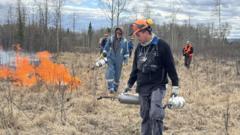
In British Columbia, community members are taking similar initiatives to prepare for wildfires. Sonja Leverkus, a wildfire researcher, has trained over 400 people in and around Fort Nelson through the Northeast BC Rural Incident Management Team, primarily focusing on indigenous residents. The group conducts prescribed burns to reduce fuel loads, operates fire wagons purchased through fundraising, and provides structural protection training to help residents shield buildings from embers. During a major fire in 2024, Leverkus and 40 team members were hired by the province to support suppression activities.
These community-led efforts highlight tensions between those promoting evacuation safety and residents who wish to defend their properties. Officials emphasize that evacuation orders prioritize life preservation, noting Canada’s relatively low wildfire fatality rates partly result from this approach. Paul Kovacs, a researcher at the University of Western Ontario, stated that the stay-and-defend mindset is actively opposed within Canada’s academic community, contrasting with approaches in countries like Australia.
Provincial authorities acknowledge that self-organized groups can be temporarily hired during active wildfires when provincial resources are unavailable. BC has increased its full-time wildfire staff by 56% in recent years. Leverkus is working toward official recognition of her program so trained participants can assist without legal consequences, with the goal of establishing a blueprint for communities nationwide.
Article Attribution | Read More at Article Source
Article summary produced by Claude AI