

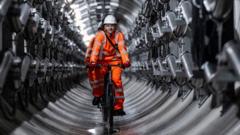
A California-based company called EarthGrid recently tested an innovative tunnel-boring machine capable of melting through rock using plasma torches heated to 27,000 degrees Celsius. During testing earlier this year, the machine successfully carved through three meters of granite by creating a vortex effect to manage debris removal. The company plans to refine the technology for potential commercial deployment as early as next year.
Interest in burying critical infrastructure has grown significantly, driven partly by geopolitical concerns such as Russia’s war with Ukraine, which demonstrated the vulnerability of above-ground facilities to drone strikes. According to engineering firms, demand is increasing from multiple sectors seeking to protect power cables, telecommunications lines, data centers, and other essential systems. Some applications under consideration include underground freight-distribution networks and pipeline systems for water, natural gas, or ammonia transport.
Data centers represent a particularly notable trend in underground infrastructure development. A facility completed this year in Italy’s Dolomite Mountains houses servers 100 meters underground in naturally cool caverns, reducing energy costs while providing protection against physical intrusion, electromagnetic interference, and other risks. Similarly, subsea internet cables are increasingly being buried along the ocean floor to reduce damage from ship anchors and other hazards.
Geopolitical factors have particularly influenced demand in regions near Russia, where countries are prioritizing infrastructure protection and security. Advances in positioning technology, including laser-guidance systems and gyroscopes, have improved tunneling accuracy in recent years. However, significant obstacles remain, including the risk of releasing trapped gases and managing flooding issues. Engineering experts note that while tunneling offers substantial protective benefits, cost considerations mean that above-ground infrastructure with additional redundancy often remains a more economical choice in many contexts outside dense urban areas.
Article Attribution | Read More at Article Source
Article summary produced by Claude AI