

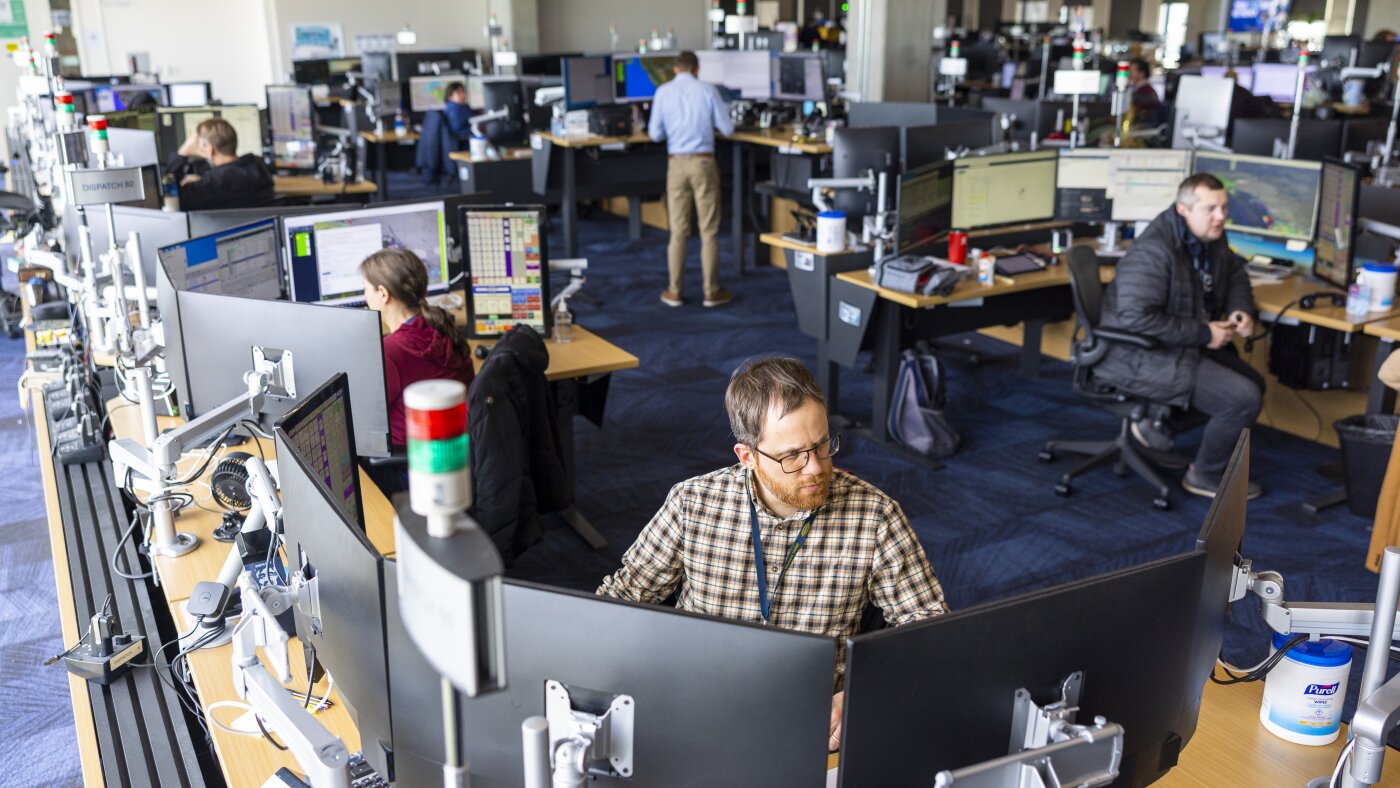
Alaska Airlines operates approximately 1,500 flights daily from its Network Operations Center near Seattle-Tacoma International Airport, where dispatchers monitor real-time data on air traffic, weather, and wind patterns across multiple screens. The airline has been using a software tool called Flyways AI since 2021 to assist dispatchers in optimizing flight routes and operations. The system processes vast amounts of data to generate route suggestions that are more efficient than what human dispatchers working alone could achieve, while still keeping human operators in control of final decision-making.
According to Alaska Airlines officials, the Flyways system has generated significant operational benefits. The airline reports saving tens of thousands of hours in the air and approximately one million gallons of fuel annually through the use of the technology. Flyways was developed by Air Space Intelligence, a startup founded by Phillip Buckendorf, who emphasizes that the shift from dispatchers making decisions based on static displays to using predictive data represents a fundamental change in operations.
Based on Alaska Airlines’ experience, the Federal Aviation Administration has moved to implement similar technology across the national airspace. The FAA announced an $875 million contract with Air Space Intelligence to develop what it calls the SMART system—Strategic Management of Airspace, Routes, and Trajectories. FAA leadership has indicated that predictive analytics technology could help prevent bottlenecks and congestion through relatively minor adjustments to schedules and routes, while officials emphasize the system is designed to support air traffic controllers rather than replace them.
The expansion from airline-specific applications to nationwide implementation raises questions about whether the technology can effectively scale to manage the complexity of U.S. airspace, which operates as the world’s busiest and most intricate system. Alaska Airlines dispatchers initially expressed skepticism about the system, viewing it as a decision-making tool rather than an autonomous system making independent choices. This skepticism reportedly decreased once operators observed tangible operational improvements in their daily work.
Article Attribution | Read More at Article Source
Article summary produced by Claude AI