

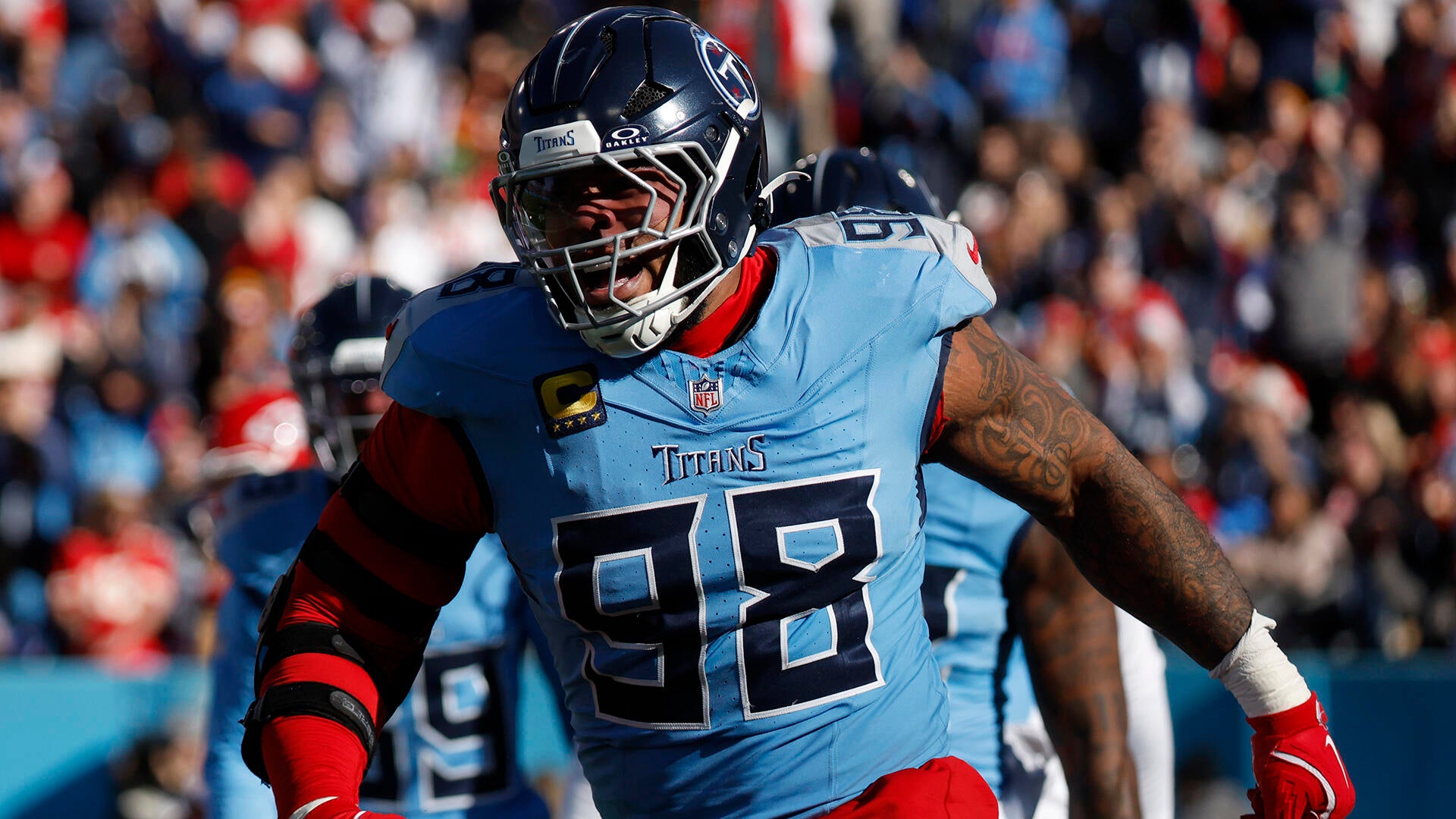
Jeffery Simmons, the Tennessee Titans’ star defensive tackle, was removed from practice on Tuesday following an altercation with right tackle JC Latham. The incident occurred during team drills when the offensive and defensive lines engaged in a post-play scuffle. While Simmons was initially involved in a tangle with center Austin Schlottmann, he subsequently threw a punch at Latham amid the larger confrontation. Assistant defensive line coach Tanzel Smart intervened and separated Simmons from the fight, after which head coach Robert Saleh halted practice to address the players and defuse tensions.
Simmons was the sole player ejected as a consequence of his actions. Rather than being sent to the locker room, he was directed to a side field where he continued his work with a strength coach, allowing him to complete his scheduled repetitions and conditioning away from the main practice activity. Saleh implemented the ejection consistent with team policy regarding throwing punches, which applies equally to games and practice sessions.
This marks the second notable confrontation between Simmons and Latham during training camp activities. A similar incident occurred in 2024 on the opening day of full-pad drills, though former coach Brian Callahan did not eject Simmons at that time despite expressing disapproval of fighting at practice. Saleh acknowledged the competitive intensity typical of offensive and defensive line interactions, characterizing the heated environment as expected given the summer conditions and the nature of these units’ engagement styles.
Simmons was recently selected to his fourth Pro Bowl in five years and earned first-team All-Pro honors following a career-defining season. Saleh has restructured the defensive front for his inaugural year leading the Titans, and Simmons anchors the revamped unit on the interior. While Saleh does not condone the escalation of practice skirmishes into physical altercations, he expressed appreciation for the competitive edge Simmons brings to both pass-rushing and run-stopping responsibilities, emphasizing the team’s need to channel aggression within disciplinary bounds.
Article Attribution | Read More at Article Source
Article summary produced by Claude AI