

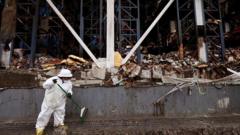
A cold-storage warehouse fire on 17 June in the Boyle Heights district of Los Angeles destroyed approximately 85 million pounds of perishable goods, including beef, pork, poultry, and seafood. The resulting decomposition has created persistent and severe odors throughout the neighborhood, prompting widespread complaints from residents and negatively impacting local businesses.
Local residents describe the smell as overwhelming and compared it to the odor of decomposing remains. The situation has also attracted large populations of flies and rats, creating additional public health concerns. A city-commissioned inspection report indicated that the conditions could facilitate the breeding of flies capable of transmitting infections to people and animals with open wounds. Community members have expressed frustration with what they view as an inadequate response and lack of transparency from city officials regarding the cleanup efforts and timeline.
Lineage, the company operating the warehouse, reported that approximately 80 percent of the food waste had been removed as of the latest update, with expectations to complete bulk waste removal within the following week. However, Los Angeles Mayor Karen Bass issued a statement noting that the company’s response “has fallen short” of expectations. The county’s public health department imposed $500-per-day fines for unsanitary conditions, and Bass set a 13 August deadline for cleanup completion. The mayor also directed city departments to prevent warehouse reconstruction until community health and safety concerns are adequately addressed.
The city has deployed mobile health clinics and distributed thousands of air purifiers to the affected area. Cleanup crews were observed working at the site with support from local air quality and law enforcement officials. Lineage estimated the cleanup operation would cost between $80 million and $100 million and described the effort as highly complex, with odor reduction identified as a priority objective.
Article Attribution | Read More at Article Source
Article summary produced by Claude AI