

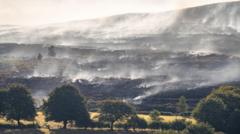
Torfaen in Wales emerged as a global hotspot for wildfire-related carbon emissions during July, placing it among the top areas worldwide for such emissions per square kilometer, according to data from Copernicus, the European Union’s earth observation programme. The ranking placed the Welsh county behind locations including Malanje in Angola, Ávila in Spain, and Annaba in Algeria in terms of wildfire emissions during the month.
A significant fire broke out on Mynydd Garnclochdy between Abersychan and Blaenavon, covering an area approximately equivalent to 300 football pitches. The blaze was characterized by fire service officials as one of the largest and most challenging incidents in south Wales in recent years. The fire’s impact extended across the region, with smoke detected as far away as Cardiff, approximately 30 miles distant. The scale and intensity of this fire, combined with other blazes in the surrounding area, led authorities to declare a major incident that eventually necessitated military assistance.
Save the Children expressed concern regarding potential health consequences, particularly for children exposed to the smoke and air quality degradation. The charity highlighted that youngsters across Wales and globally face respiratory risks from wildfire smoke, heat exposure, and restrictions on outdoor activities due to unsafe air conditions. A local councillor noted that smoke conditions were particularly severe approximately three weeks after the initial fire outbreak, with specific concern raised about impacts on elderly residents and individuals with respiratory conditions such as emphysema and COPD.
Torfaen council stated it was not previously aware of the EU data but acknowledged through its own air quality monitoring that elevated particulate concentrations were recorded during the wildfire period. The council noted that while its monitoring station detected these elevated levels, it primarily tracks general background air quality rather than conditions immediately adjacent to fire locations. Officials stated that prolonged wildfire incidents have the potential to adversely affect local air quality through increased smoke and particulate matter. Copernicus indicated that the emissions data from Torfaen represented extremely unusual conditions for the area.
Article Attribution | Read More at Article Source
Article summary produced by Claude AI