

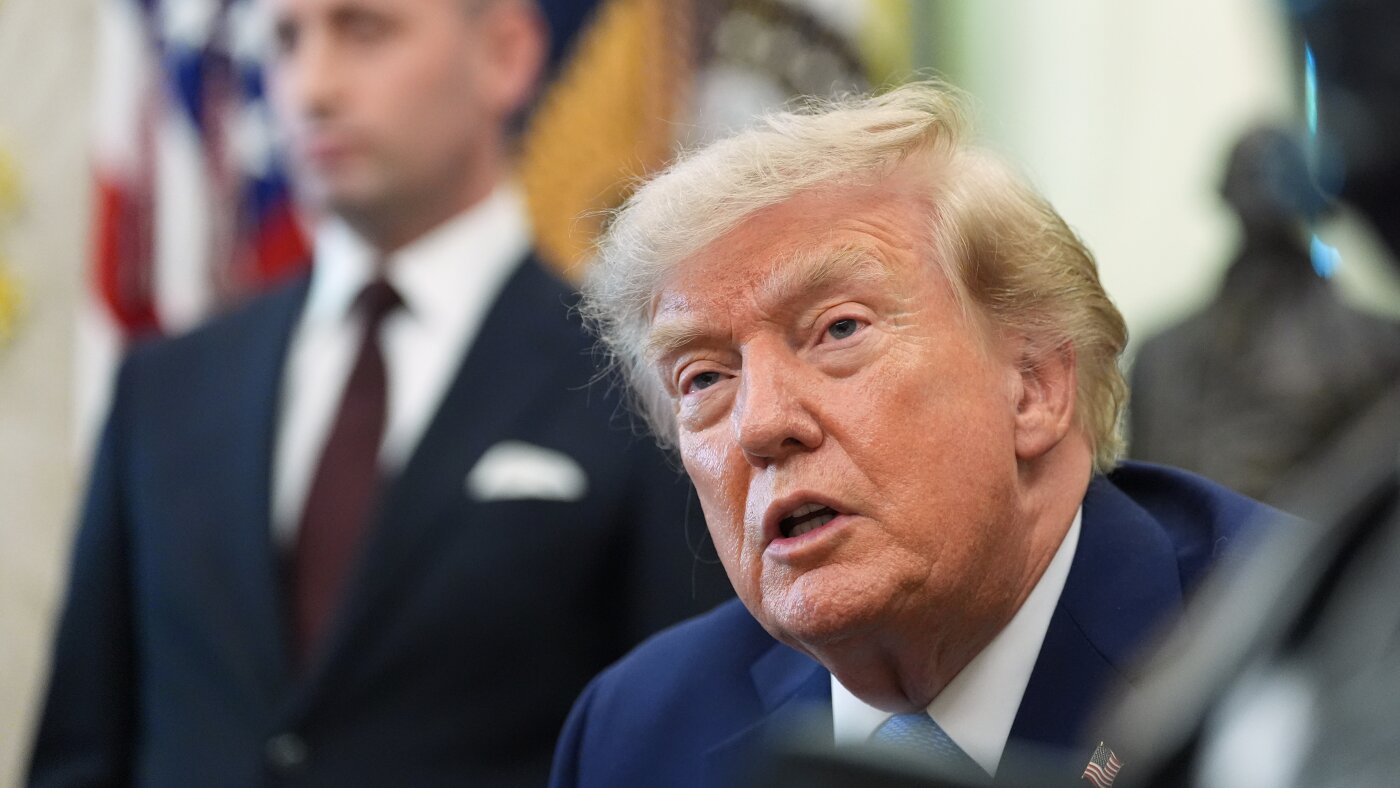
President Trump on Thursday signed two executive orders addressing birthright citizenship and birth tourism, renewing efforts to restrict automatic citizenship following a Supreme Court decision earlier this year that struck down a similar earlier order.
The first executive order, titled “Continuing to Protect the Meaning and Value of American Citizenship,” seeks to exclude from automatic citizenship children born to employees of foreign governments, such as embassy or consulate staff who are foreign nationals, as well as children of members of terrorist organizations or parents engaged in fraudulent activity to obtain citizenship. The second order directs the Secretary of State and Secretary of Homeland Security to deny visas to individuals suspected of engaging in birth tourism—the practice of foreign nationals misrepresenting their travel purpose to give birth in the U.S. so their children receive automatic citizenship.
Data on the prevalence of birth tourism varies significantly. The Centers for Disease Control and Prevention estimated that fewer than 10,000 babies were born in the U.S. to foreign residents in 2024, while the Center for Immigration Studies, which supports immigration restrictions, estimated that temporary visitors gave birth to approximately 70,000 babies in 2023. Both figures suggest such births represent less than 2 percent of the roughly 3.6 million babies born annually in the U.S.
Senior White House adviser Stephen Miller characterized the orders as among the most significant immigration reforms undertaken by the administration. The American Civil Liberties Union, which previously argued in court for birthright citizenship protections, stated the new orders would face legal challenges similar to the earlier order. Immigration policy analysts questioned whether the orders could withstand judicial scrutiny, with critics arguing they conflict with the recent Supreme Court decision affirming birthright citizenship under the 14th Amendment. Administration officials maintained the orders employ legally sound approaches that comply with existing court rulings.
Article Attribution | Read More at Article Source
Article summary produced by Claude AI